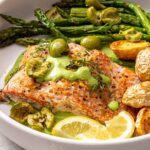
Baked Sheet Pan Salmon and Asparagus
This baked sheet pan salmon and asparagus is a quick, high-protein dinner that comes together on one pan in about 30 minutes. Naturally gluten-free and packed with nutrients, it’s a simple, balanced meal you’ll want to keep on repeat.A few notes:-- I prefer wild salmon for both better flavor and nutrition. That said, wild salmon is generally much thinner than farm-raised salmon. When you go to the fish counter, see if they can give you center cut fillets. They should also be able to remove any pin bones and the skin.-- The thickness of the salmon will impact the cook time significantly. I like to start with 13 minutes, and go up in 2-minute increments from there. This recipe is written for fully-cooked salmon, not medium or medium rare.-- I like the thinner asparagus for this recipe. It cooks much more evenly, and quickly!
Servings 4
Equipment
- high speed blender (to make the sauce)
Ingredients
For the Spice Blend:
- 1 ½ teaspoons kosher salt
- 1 teaspoon garlic powder
- ½ teaspoon freshly ground black pepper
- ¼ teaspoon paprika
For the Salmon & Asparagus:
- 4 (4-6 oz) wild salmon fillets, boneless and skinless (see notes)
- 12 oz. 1 bundle wild asparagus ends trimmed
- 2 tablespoons extra-virgin olive oil
- 1 lemon halved
- ½ cup torn, pitted Castelvetrano olives
For the Herb Sauce:
- 2 cups loosely packed herbs (I like cilantro and dill)
- 1 cup lactose-free Greek yogurt
- 3 cloves garlic roughly chopped
- 2 teaspoons lemon zest
- 2 tablespoons freshly squeezed lemon juice
- 2 tablespoons olive brine
- 2 tablespoons good extra-virgin olive oil
- ½ teaspoon kosher salt
- ¼ teaspoon freshly ground black pepper
To Garnish & Serve:
- ¼ cup roughly chopped dill or cilantro to garnish
- 1 teaspoon lemon zest to garnish
- Roasted potatoes to serve (optional)
- Jasmine rice, cooked to serve (optional)
Instructions
- Preheat the oven to 400°F. Line a baking sheet with parchment and set aside.
For the Spice Blend:
- In a small bowl, mix the salt, garlic powder, pepper, and paprika. Set aside.
For the Salmon and Asparagus:
- Add the salmon fillets to one side of the sheet pan and the asparagus on the other. Generously drizzle both the fish and the veggies with olive oil, massaging it into the salmon and asparagus so they’re fully coated.
- Sprinkle the salmon with about ⅔ of the spice mixture, and add the remainder to the asparagus, tossing to coat.
- Arrange the asparagus in an even layer and the salmon seasoned-side up. Scatter the olives over the asparagus and add the lemon to the sheet pan, cut-side down.
- Bake on the middle rack for 13 minutes. Remove from the oven and see if the salmon flakes easily with a fork. If not, transfer back to the oven and bake for an additional 2-4 minutes, until the salmon is fully cooked and the asparagus is tender.
- Using tongs, squeeze the hot lemon all over the fish and veggies.
For the Sauce:
- While the fish is cooking, make the sauce. In a high-speed blender, add the herbs, yogurt, garlic, lemon zest, lemon juice, olive brine, extra-virgin olive oil, salt, and pepper. Blend for 30 seconds to 1 minute until smooth, creamy, and bright green.
To Serve:
- In shallow bowls, add a swoosh of the sauce. Top with asparagus, a salmon fillet, herbs, olives, lemon zest, and an extra drizzle of sauce. Option to serve with roasted potatoes or cooked jasmine rice. Enjoy!
To Store & Reheat:
- Store any leftover salmon, asparagus, and sauce separately in airtight containers in the fridge for up to 3 days.
- To reheat, warm the salmon and asparagus in a 350-degree oven for 8-10 minutes, or until heated through. You can also microwave gently in 30-second increments, though the oven keeps the salmon from drying out. The herb sauce is best served cold or at room temperature, so spoon it on just before serving.
Notes
Swaps & Substitutions:
- Salmon: Wild salmon is preferred, but farm-raised salmon, cod, or halibut also work—adjust cook time as needed for thickness.
- Asparagus: Swap with green beans, broccolini, or zucchini (watch cook times, as they may vary).
- Olives: Castelvetrano olives can be replaced with kalamata olives or omitted.
- Yogurt: Use lactose-free, regular Greek yogurt, or a plain dairy-free yogurt alternative.
- Herbs: Cilantro and dill can be swapped for parsley or basil depending on preference.
- Olive brine: Substitute with extra lemon juice or a splash of pickle juice for similar acidity.
- Lemon: Lime can be used in place of lemon if needed.
- Serving base: Serve with roasted potatoes, sweet potatoes, rice, or quinoa.