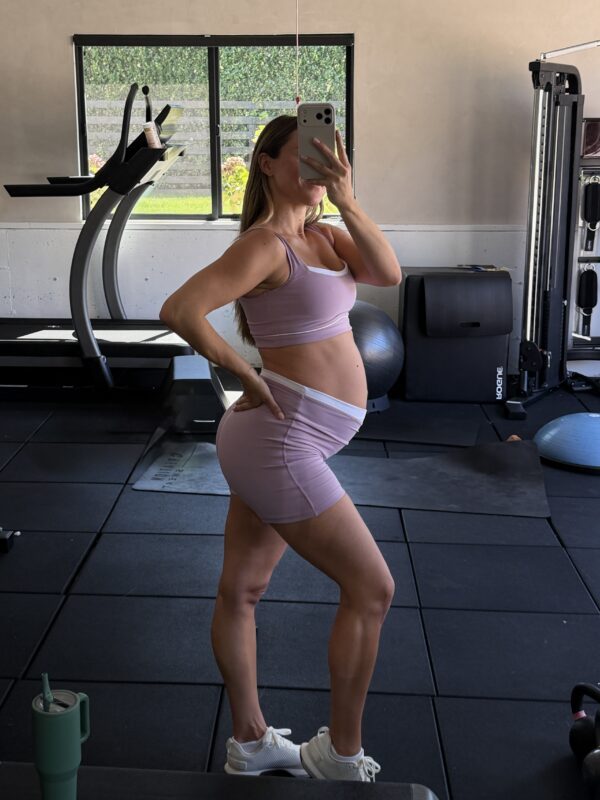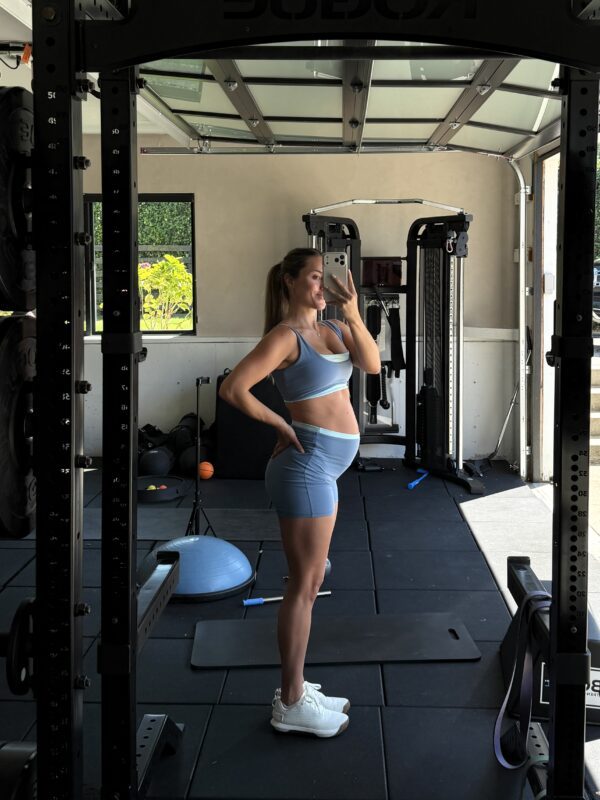

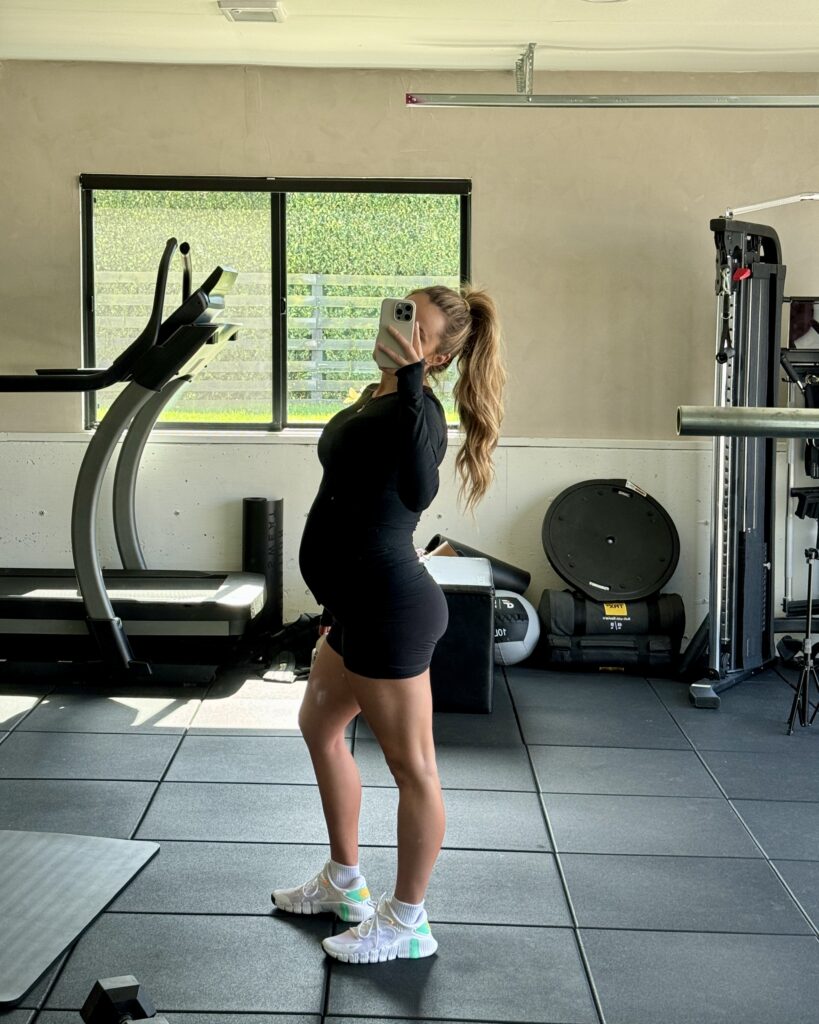
I’m more than 18 months postpartum now and I’m still working on healing my core with pelvic floor exercises after pregnancy and birth. I feel stronger than I ever have in my whole life (thanks to my Strength guides) but I think that working on my pelvic floor will be part of my daily routine to protect my body through all phases of life.
It’s never too late (or too early!) to work on your pelvic floor. Here is just a bit of pelvic floor education, plus 5 postpartum pelvic floor exercises that are low-impact, gentle, but effective.
The Role of the Pelvic Floor During Pregnancy
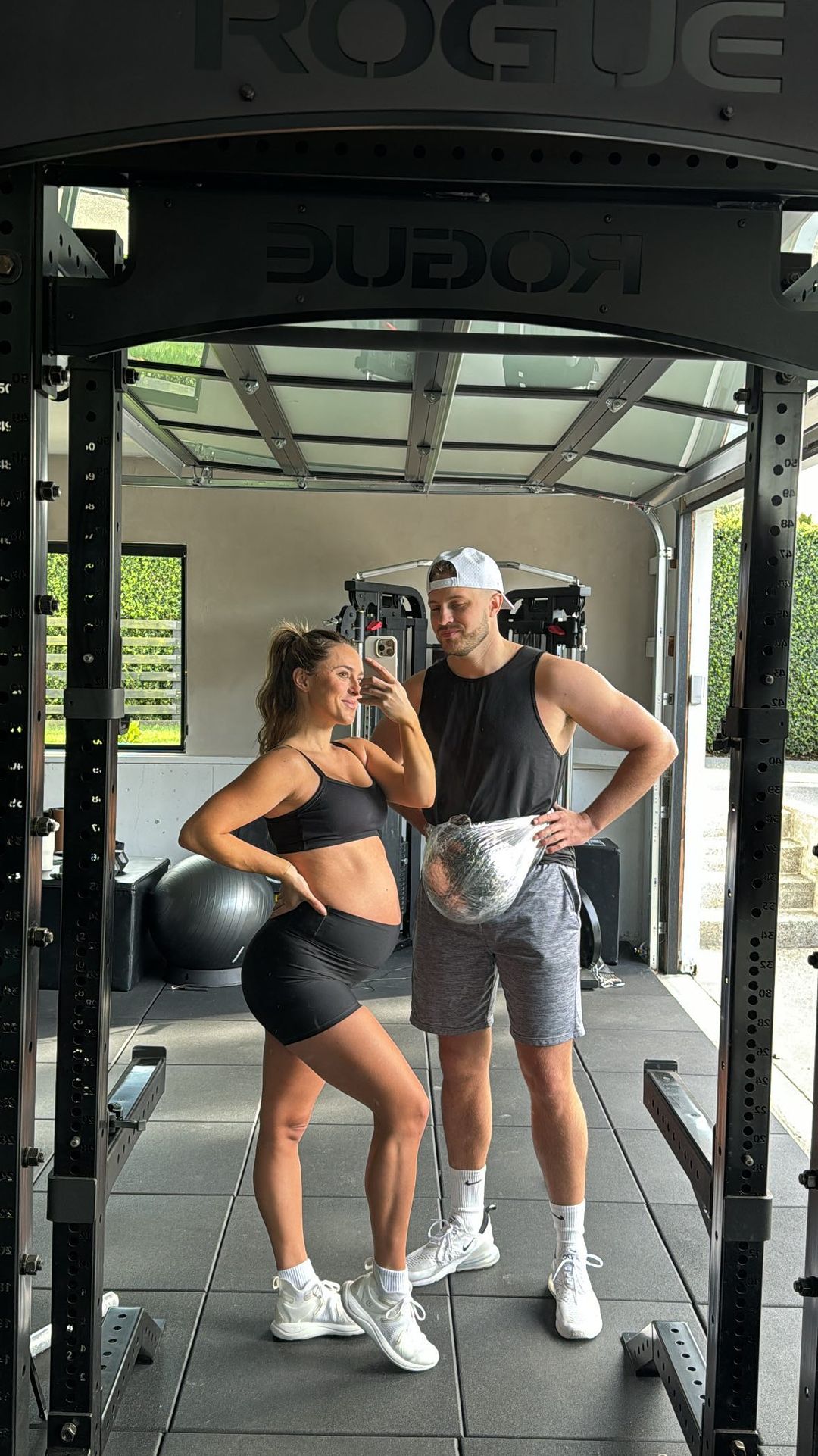
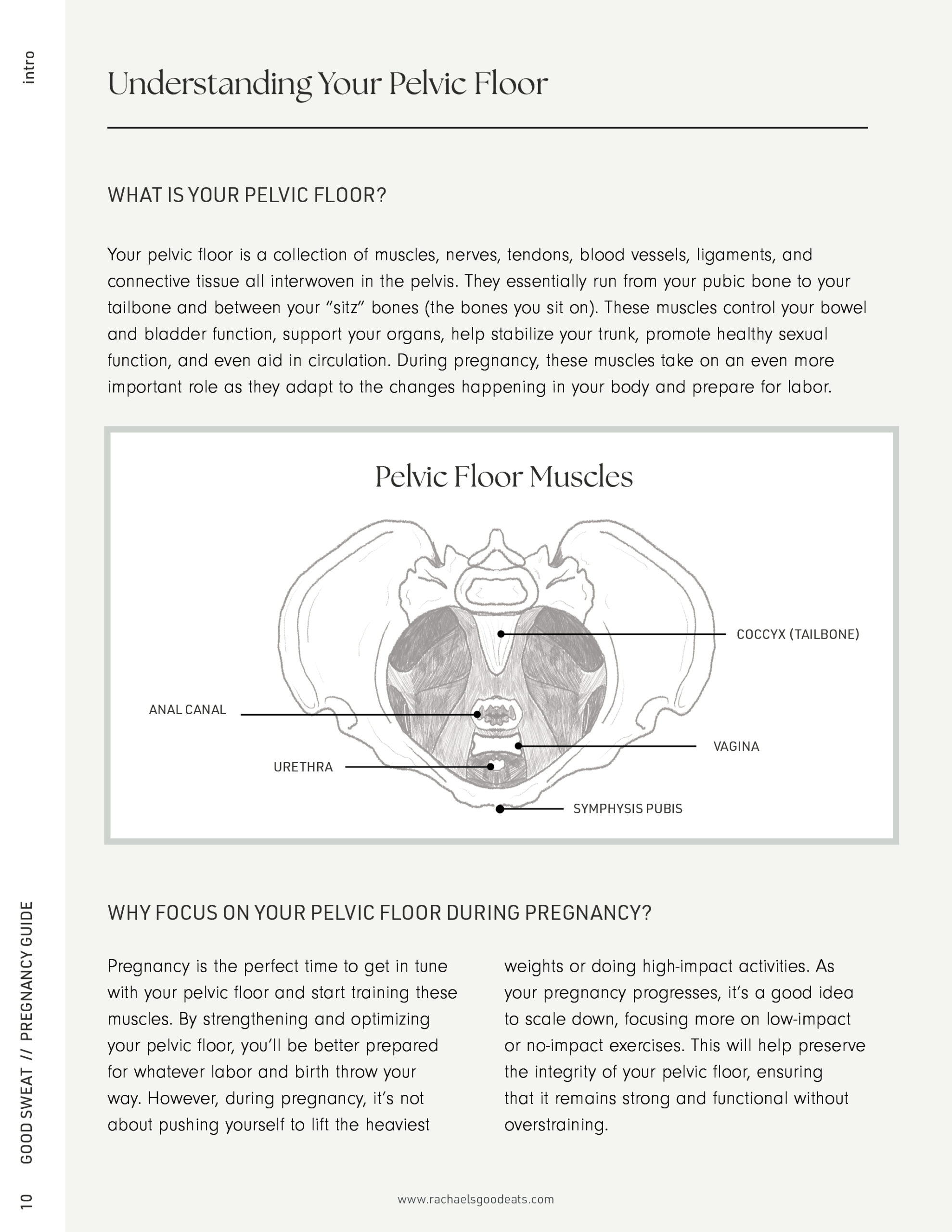
During pregnancy, the pelvic floor is under constant demand. Hormonal changes, posture shifts, and the added weight of a growing baby all impact how these muscles function. Learning how to properly engage and relax the pelvic floor during pregnancy helps prevent excessive tension, supports daily movement, and builds awareness that carries into postpartum recovery.
This is where gentle, intentional pelvic floor work becomes essential. Throughout pregnancy, the pelvic floor supports your growing baby, adapts to increased pressure, and works closely with your core and breathing muscles. When these muscles are supported and trained during pregnancy, postpartum recovery tends to feel more connected and manageable rather than overwhelming.
How Postpartum Pelvic Floor Exercises Support Recovery
After birth, postpartum pelvic floor exercises play a critical role in healing and rebuilding strength. The pelvic floor has experienced months of pressure and stretching, and in some cases trauma, which can lead to leaking, heaviness, or core weakness.
Foundational postpartum pelvic floor exercises focus on breath, relaxation, and controlled activation. These movements help restore function, improve bladder control, support the core, and set the foundation for a safe return to higher-impact exercise.
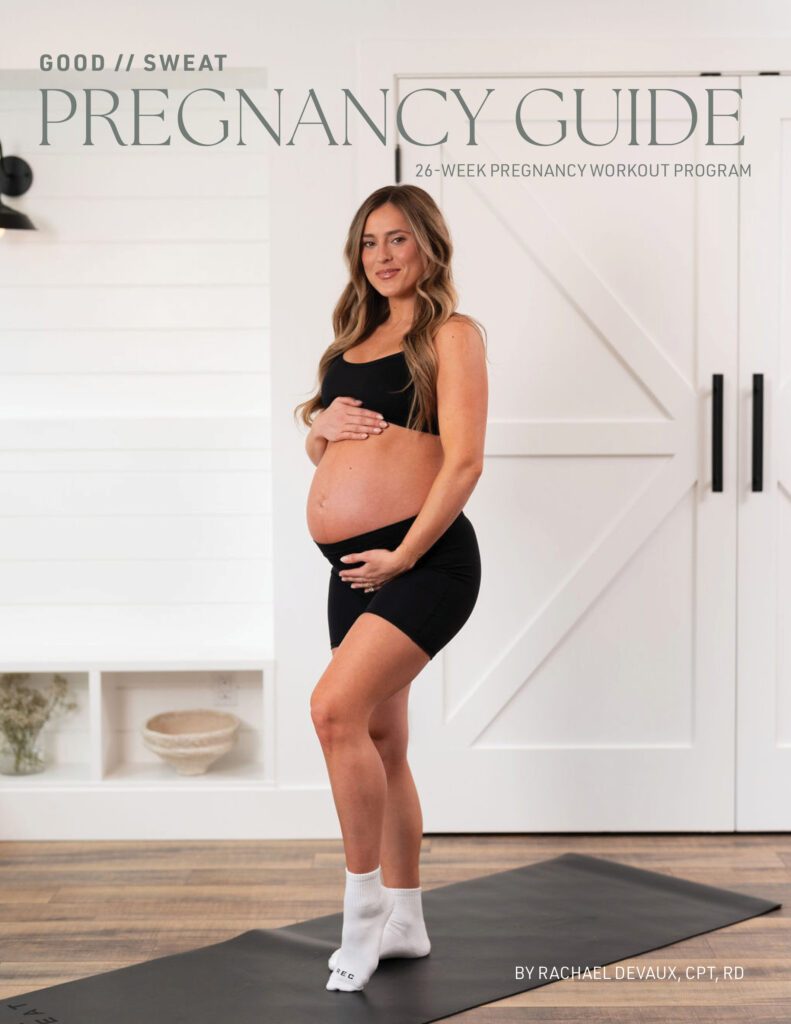
I developed a 26-week pregnancy workout program to help expecting mamas stay healthy and feel fit throughout pregnancy. The program has a huge focus (and tons of education) on the pelvic floor through breathing, connecting, and strengthening. This guide is also fantastic to use for postpartum fitness and recovery! I started the guide in reverse during postpartum, doing the lower-intensity workouts toward the end of the guide as my first workouts postpartum. If you’re confused about where to start, this guide can help you through pregnancy and postpartum.
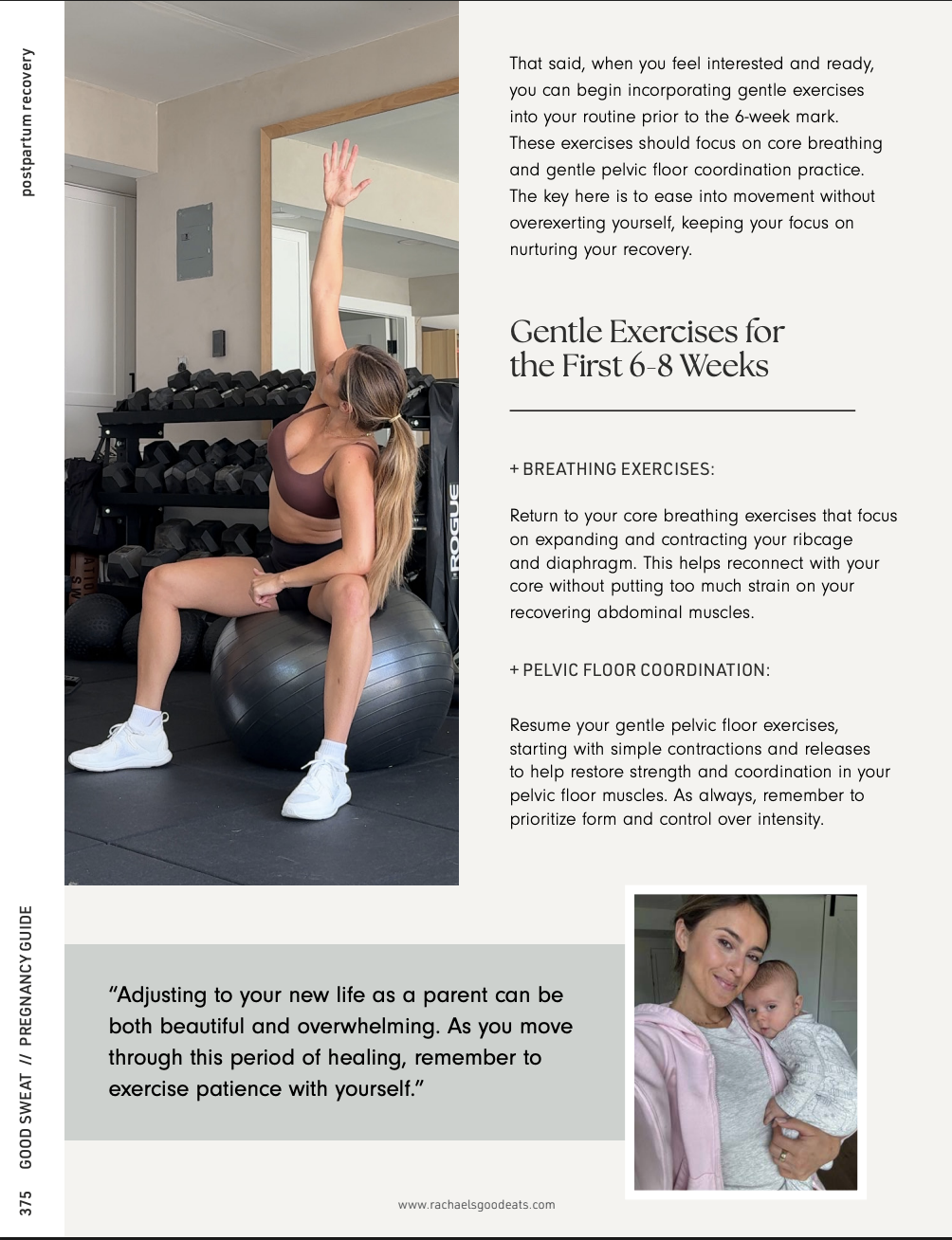
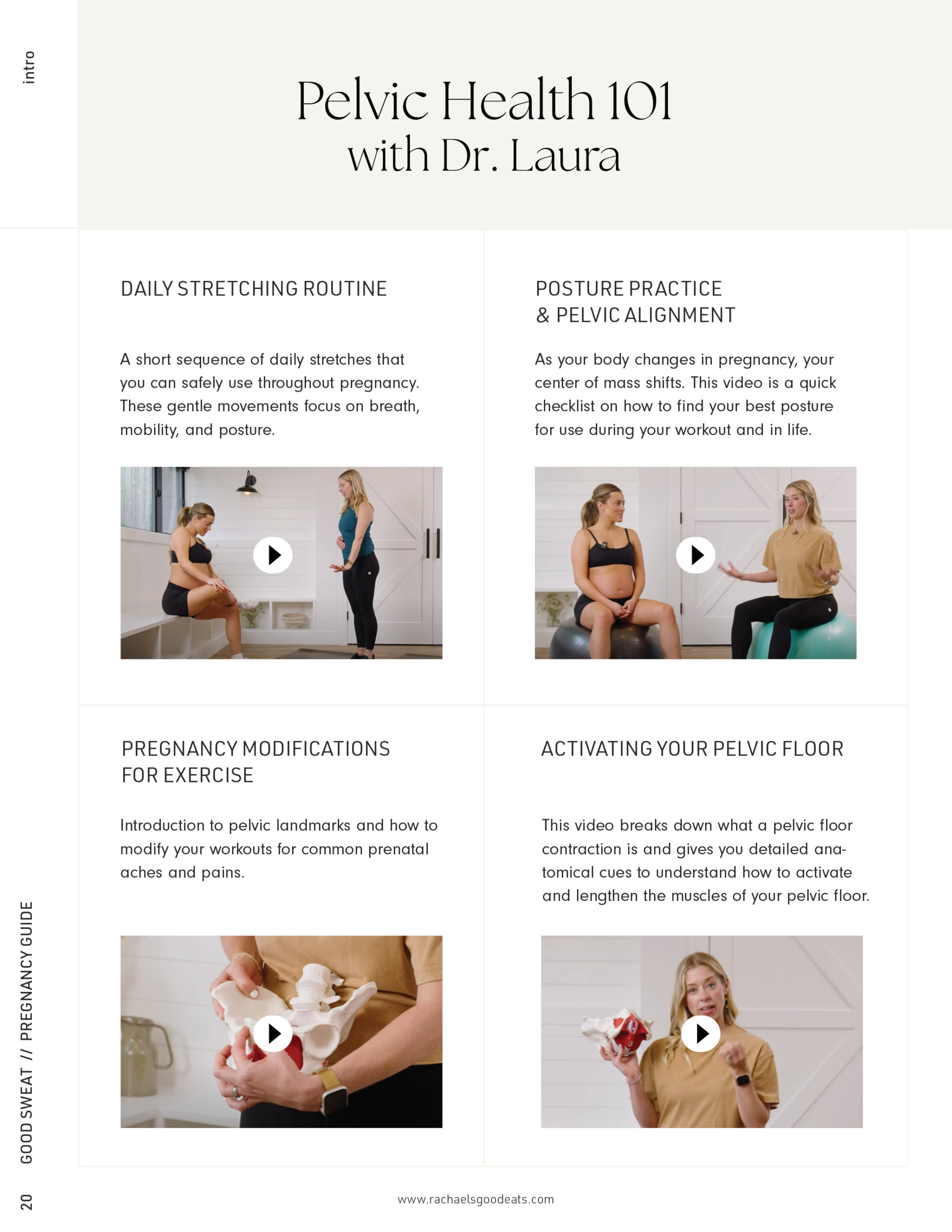
Gentle Pelvic Floor Exercises
What you practice during pregnancy directly supports postpartum healing. And postpartum, those same exercises continue to rebuild strength, coordination, and confidence at a pace your body can handle. Think of these movements as lifelong tools — supporting your body during pregnancy, postpartum, and beyond.
Bird Dog
Out of all the postpartum pelvic floor exercises, this is my all-time favorite. It’s so effective! Inhale to prepare. Exhale to engage and lift one arm and the opposite leg parallel to the floor. Your neck, spine and pelvis should remain neutral. Inhale to expand as you lower your arm and leg down to the starting position. Repeat on the opposite side.
Standing Knee To Chest Breathing
Stand with your feet hip-width apart. Raise both arms and take a deep breath in. On your exhale, bring both arms down towards your chest at the same time as you lift one knee up towards your chest, drawing your core in and engaging. Alternate legs each breath and focus on slow and controlled movements, breathing through your belly each time.
Forward Roll
This is one of the best postpartum pelvic floor exercises to do in the weeks that you get home from the hospital. Keep your neck and spine neutral. Taking big deep breaths, press your wrists and forearms into the ball for a forward roll, arms staying fully extended. Return back to kneeling on your heels and repeat, feeling the stretch in your upper body.
Weighted Squat to Side Reach
Start in a standing position with weights above each shoulder, palms facing each other. Squat down, keeping weights above shoulders, then on the way up, twist your torso toward your right side, lifting your left heel off the ground and twisting the ball of your foot toward the right. Extend both arms up overhead as you twist. Repeat, alternating sides.
Seated Ball March
Exhale to engage and lift one foot about one or two inches off the floor. Keep the pelvis neutral and flat. Inhale to expand and lower the foot back down. Repeat on other side, trying to avoid any movement on the ball.