
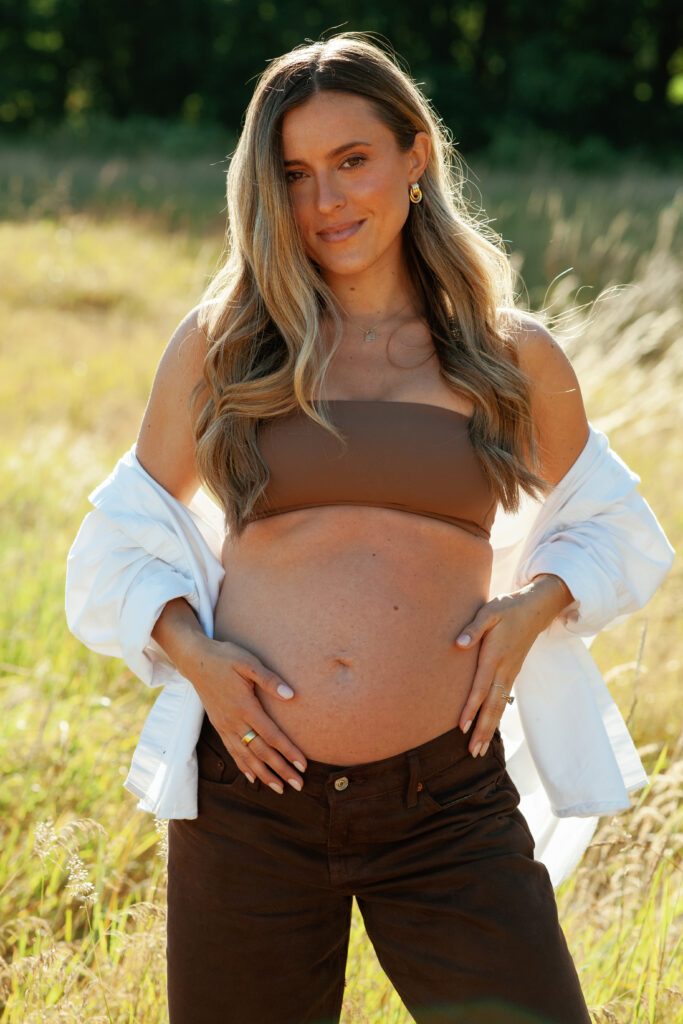
First, a biiiiig disclaimer: there’s nothing I can do or say that will guarantee pregnancy or make conception happen. Every body and every journey is different. You can do “everything right” and still have a difficult or long road to pregnancy, and I never want anything in this post to come across as a formula for conception.
What I can share are some of the things I personally focused on to support my body before pregnancy—from nutrition and movement to stress, sleep, and overall health. Having been through pregnancy and postpartum myself, I know how much goes into this season, both physically and mentally. My goal with this post is simply to share what helped me feel nourished, strong, informed, and as prepared as possible going into pregnancy.
Preparing for pregnancy also isn’t just about what you do in a given month or cycle. For me, it was much more about zooming out and looking at my overall health and the habits I already had in place. Getting pregnant isn’t always easy or quick, and while so much of the process is outside of our control, taking care of ourselves is something we can focus on.
And honestly, a lot of these are habits I care about whether I’m trying to conceive or not. Eating enough, moving my body, getting sleep, managing stress, and taking care of my mental health are things I want to prioritize through pregnancy, postpartum, motherhood, and beyond.
1. Prioritize Wellness
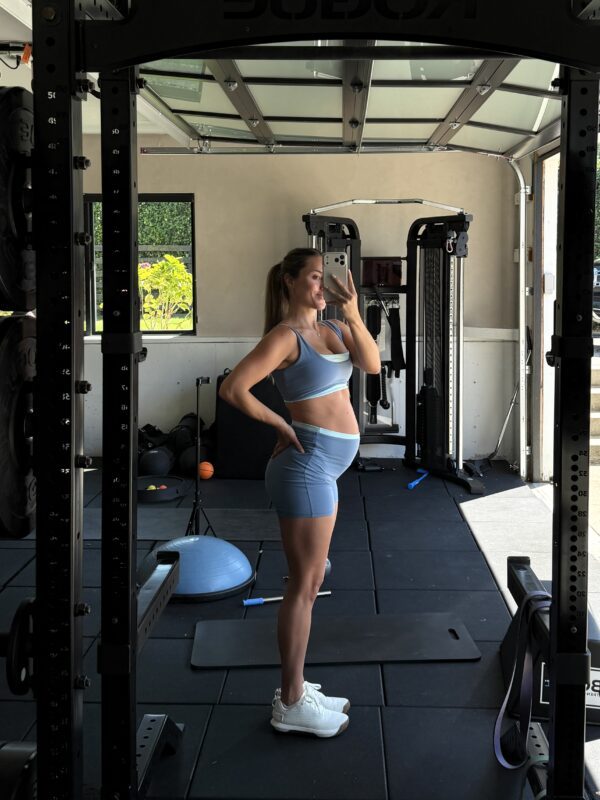
Before pregnancy was even on my immediate radar, I had already built a movement routine that felt sustainable for me. And when pregnancy became something we were thinking about, I focused even more on consistency over intensity.
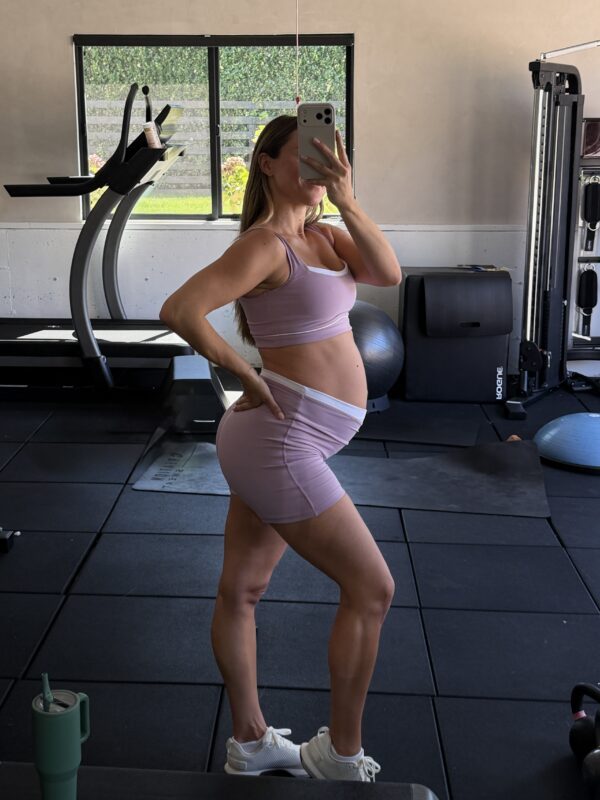
For me, that looked like strength training regularly to build and maintain muscle, support metabolic health, and simply feel strong in my body. I also incorporated plenty of lower-impact movement like incline walking, which I’ve always loved on days I don’t feel like doing a full workout. Stretching and mobility were part of my weekly routine too, along with 1–2 full rest days each week.
I think the important thing here is that the goal isn’t to suddenly do more because you’re thinking about pregnancy. If anything, I wanted to have a routine that supported me without draining me. I knew there would eventually be days during pregnancy when nausea, fatigue, or just changing energy levels meant I wasn’t going to do my usual workout—and there were plenty lol. Having a flexible routine already in place made it much easier to meet myself where I was.
Outside of workouts, I really tried to pay attention to recovery too. For me, that meant getting enough sleep when I could, giving myself actual rest days, getting outside and walking, and not feeling like I needed to be doing something productive every second of the day. Obviously life isn’t always going to cooperate perfectly with any of those things, but they were habits I wanted to have in place before pregnancy rather than suddenly trying to overhaul everything once I was pregnant.
To me, wellness isn’t about creating a perfect routine. It’s finding habits that feel sustainable, enjoyable, and grounding enough that you can realistically maintain them over time.
2. Focus on Nourishing Foods
First of all, there are no magical foods that are going to make you pregnant. Nutrition is one piece of a much bigger picture, but as a dietitian, it was obviously an area I wanted to be intentional about while preparing for pregnancy.
For about six months leading up to trying to conceive, one of my biggest priorities was making sure I was eating enough. I wasn’t dieting, restricting, eliminating food groups, or intentionally pushing my body into a calorie deficit. I wanted my body to feel well-fed and supported rather than asking it to constantly do more with less.
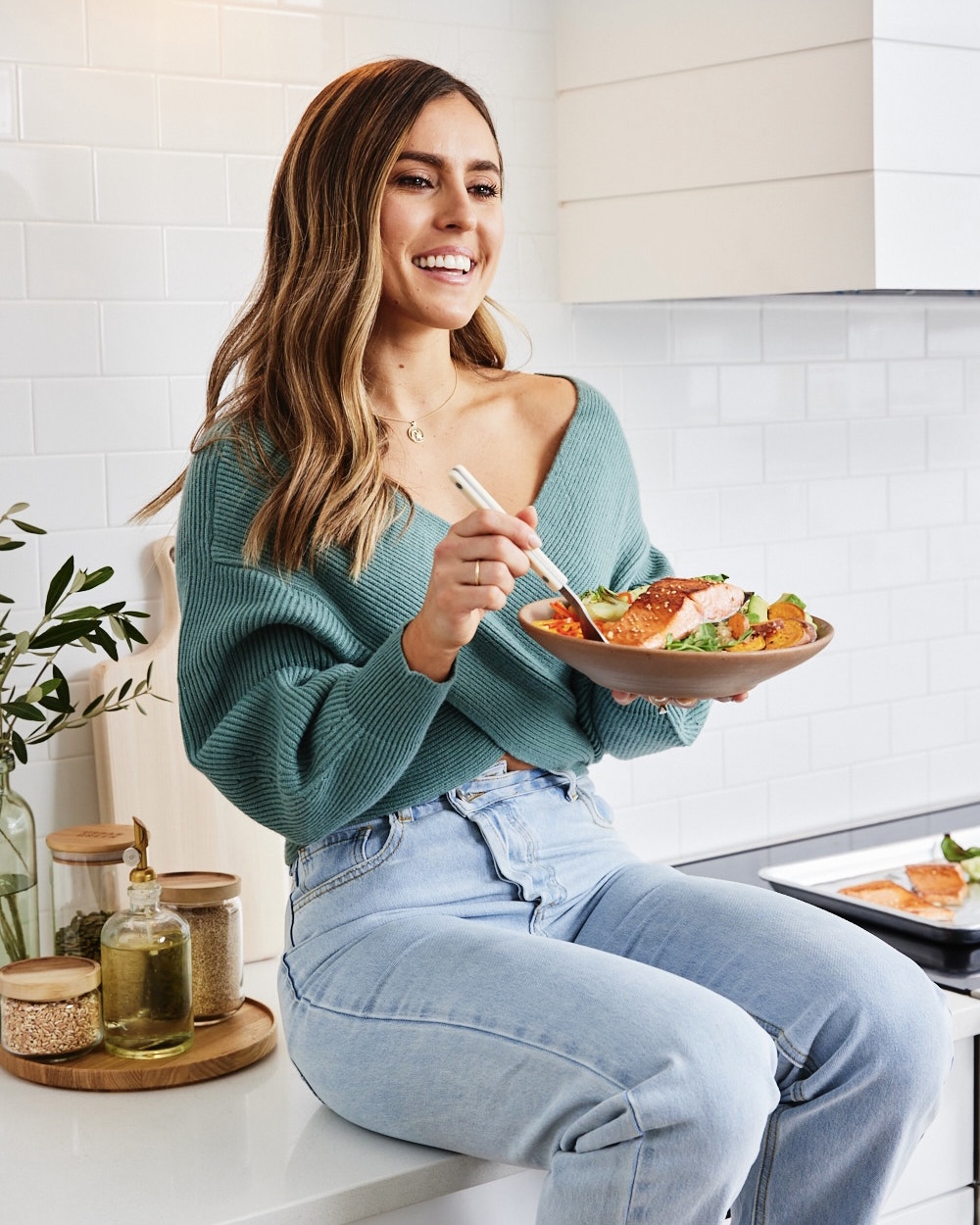
And this is really how I approach nutrition in general. I don’t believe we need to remove major food groups or make eating unnecessarily complicated in the name of being “healthy.” Most of my meals are built around protein, complex carbohydrates, healthy fats, and plenty of color from fruits and vegetables. Each plays a different role, and together they make meals that are satisfying, nutrient-dense, and actually enjoyable to eat.
Protein is obviously a big one for me. It provides the amino acids our bodies need to build and maintain muscle and supports satiety, among many other functions. But protein isn’t the entire meal. Carbohydrates are our body’s preferred source of energy, and foods like potatoes, oats, rice, fruit, beans, and whole grains also provide fiber and important vitamins and minerals. Healthy fats from foods like avocado, extra virgin olive oil, nuts, seeds, eggs, and fatty fish add flavor and staying power while also providing essential fatty acids and helping with the absorption of fat-soluble vitamins.
I think that’s especially important to talk about for women because there is SO much nutrition advice telling us what to cut out. Less carbs, less fat, fewer calories, no dairy, no gluten… the list goes on. Unless there’s a medical reason or something genuinely doesn’t work for your body, I’m much more interested in asking what can we add to the plate to make it more nourishing? And while our nutrition needs change throughout different stages of life, that basic approach can work whether you’re feeding yourself, your partner, your kids, or eventually navigating pregnancy and postpartum.
The Way I Design My Recipes
This is also exactly how I develop the recipes in both of my cookbooks. They’re not “diet” cookbooks, and you won’t find me removing entire food groups just for the sake of making a recipe sound healthier. I want you to make a meal and know that I’ve already thought about the nutrition piece for you.
As a dietitian, I’m thinking about: Where’s the protein? Are there quality carbohydrates? Is there fiber? Is there a source of healthy fat? Can we add vegetables or another nutrient-dense ingredient without making the recipe complicated? And, equally important, does it actually taste GOOD?
Because I’m never going to tell you to eat a sad bowl of chicken and broccoli just because it technically checks a few nutrition boxes lol.
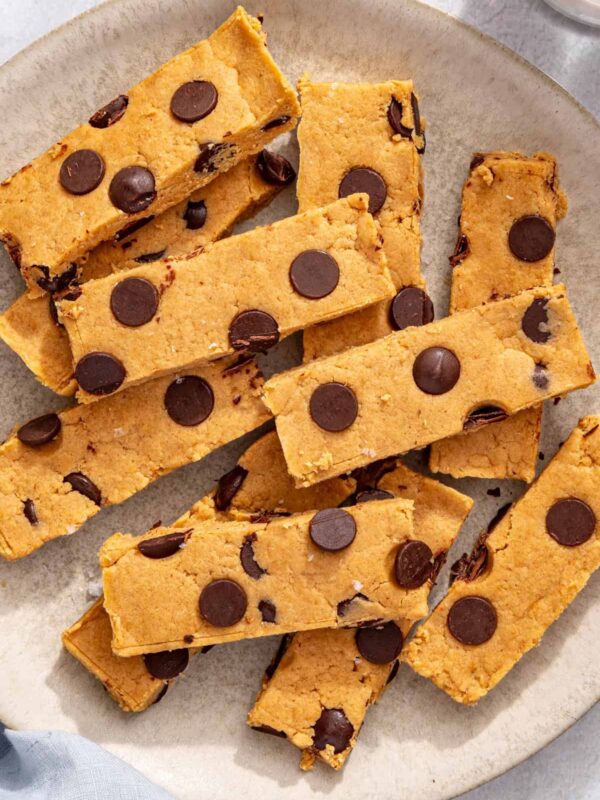
My first cookbook, Rachael’s Good Eats, is really an extension of the way I’ve cooked and eaten for years: approachable, nutrient-dense recipes made with real ingredients that still feel fun and satisfying. You’ll find everything from breakfasts and snacks to salads, bowls, dinners, and desserts, so it’s a great resource if you’re looking for everyday recipes that make eating well feel a lot less complicated.
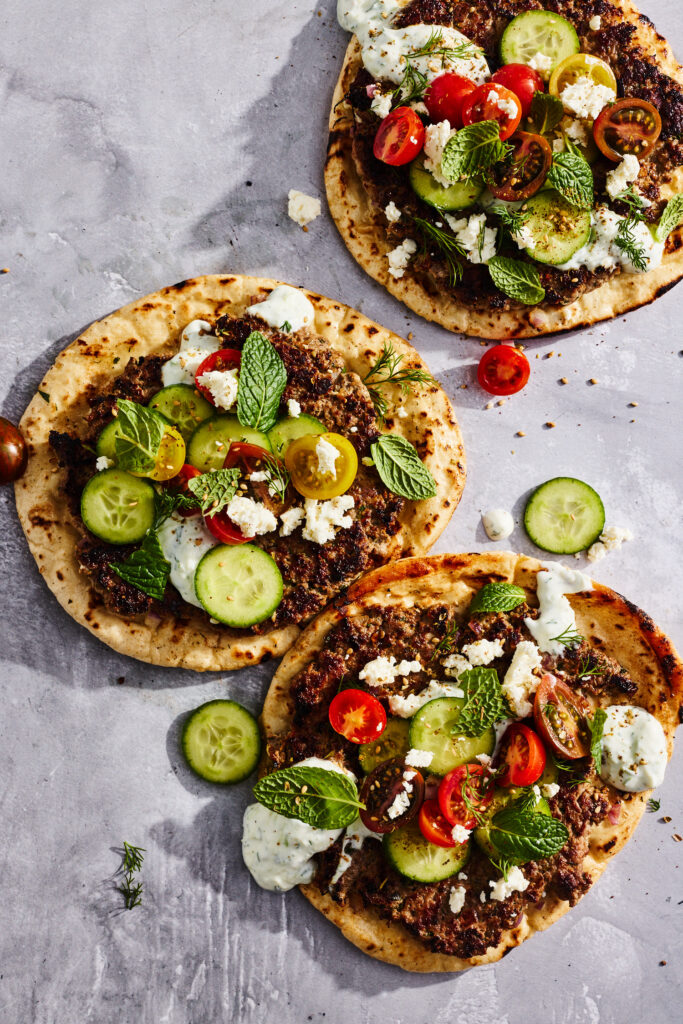
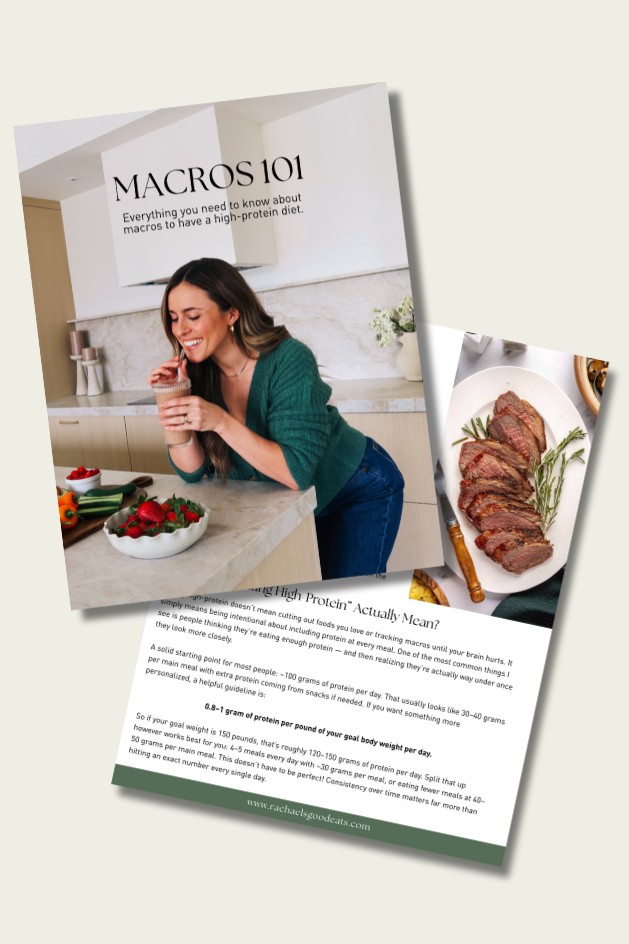
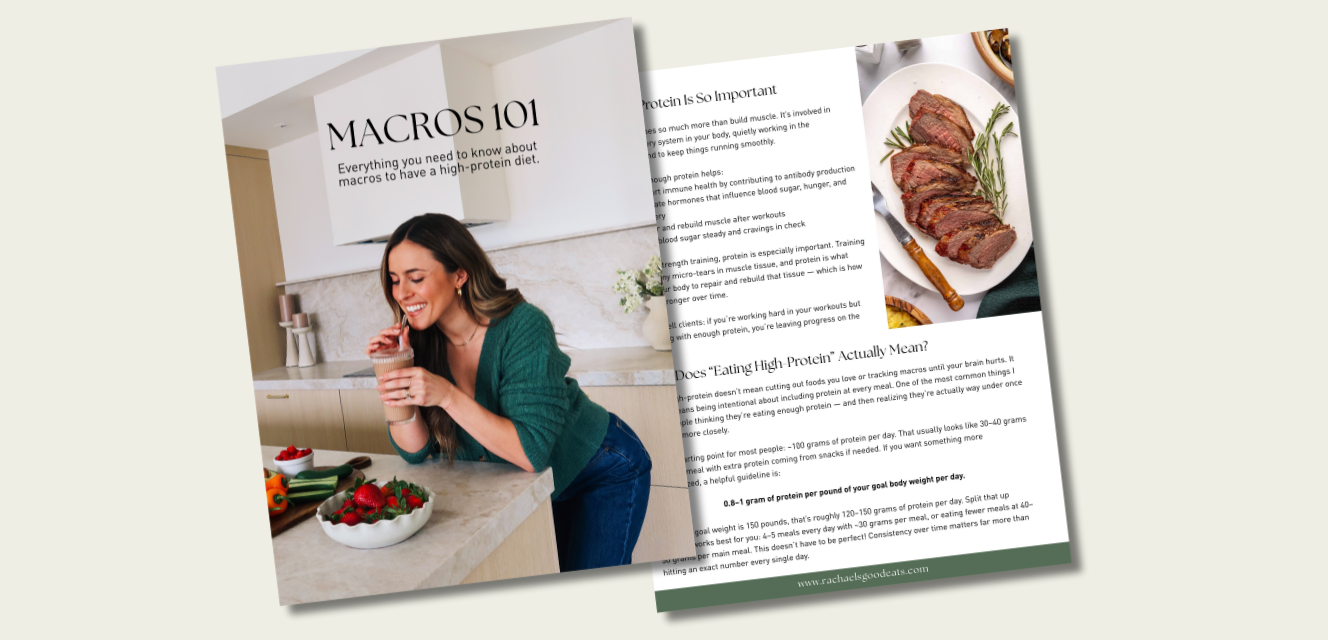
And if increasing your protein is a goal, The High-Protein Plate takes that philosophy even further. I really designed the recipes to help you build balanced, protein-forward meals without feeling like you’re just eating protein foods all day. Of course there are still carbs. There are still healthy fats. There are sauces and cheese and pasta and potatoes and dessert. Because that’s how I actually eat, and I wanted the book to reflect that.
You’ll also notice that I include the macros for every recipe in the book because I know that information can be really helpful for some people. But you absolutely don’t need to track them 🙂 I personally don’t. The whole idea behind the book is that if you start incorporating these recipes into your routine, you’re naturally going to be getting more protein at meals without having to constantly calculate or overthink it.
P.S. I get asked every so often why calories aren’t listed with the recipes. That was intentional! Since I provide the protein, carbohydrate, and fat macros, you can easily calculate the calories if that’s information you want. I personally don’t love seeing a calorie count attached to every recipe, and I didn’t want it to become the focus or make anyone feel like they needed to choose meals based on the lowest number (I talk about this in the intro of the book as well:) ). I’d much rather you look at the whole plate—protein, carbs, fats, fiber, micronutrients, and most importantly, food that actually tastes good and leaves you satisfied.
That’s probably the biggest thing I want you to know about my recipes: you can trust that they’re going to be delicious, but you can also trust that I’ve thought about what goes onto the plate from a nutrition standpoint. I’m a recipe developer, but I’m a dietitian first, and that lens is always there when I’m creating food for my family, this site, or my cookbooks.
During the months leading up to pregnancy, I wasn’t following a special fertility meal plan. I was eating the same kinds of balanced, nourishing meals you’ll find throughout my books—making sure I was eating enough overall, getting plenty of protein, including carbohydrates and healthy fats, eating a variety of plants, and enjoying my food. That’s the kind of eating pattern I want to be able to maintain for years, not just during one specific stage of life.
I also started taking my prenatal about six months before we started trying to conceive. You definitely don’t have to start that early, but I knew pregnancy was something we were planning for and it made sense for me. Folate is particularly important before conception and during very early pregnancy, which is one reason prenatal supplementation is generally recommended before you actually become pregnant.
Of course, supplements aren’t one-size-fits-all, and what you need can depend on your diet, health history, labs, and your provider’s recommendations. You can read more about the supplements I personally took while TTC and throughout pregnancy here. You can use my link and code ‘RACHAEL15’ to save $$ on the prenatal multivitamin I take.
3. Build Your Support System Early
You know the phrase “it takes a village”? It couldn’t be more true when it comes to pregnancy. Your body (and life lol) changes very quickly, and having people you trust to lean on makes such a difference.
I was lucky to have my sister and close friends as sounding boards for questions, advice, and the occasional is this normal?! text. I also found a few professionals I really trusted and knew I could lean on throughout pregnancy.
For me, that eventually included a pelvic floor physical therapist, chiropractor, my medical team, and a doula. That doesn’t mean you need to assemble an entire team before you start trying to conceive—or that your support system needs to look anything like mine. But having people I trusted made a huge difference for me.
If you’re thinking about pregnancy, this can also be a good time to establish care with an OB/GYN, midwife, or other healthcare provider you feel comfortable with. A preconception appointment can give you an opportunity to talk through your health history, medications or supplements, vaccines, nutrition, cycle concerns, or anything else specific to you.
Your “village” can also just be your partner, a sister, your mom, a friend who’s been through it, or someone who will listen without immediately giving you advice. TTC can bring up a lot emotionally, especially when it takes longer than expected, and having someone you can actually talk to matters.
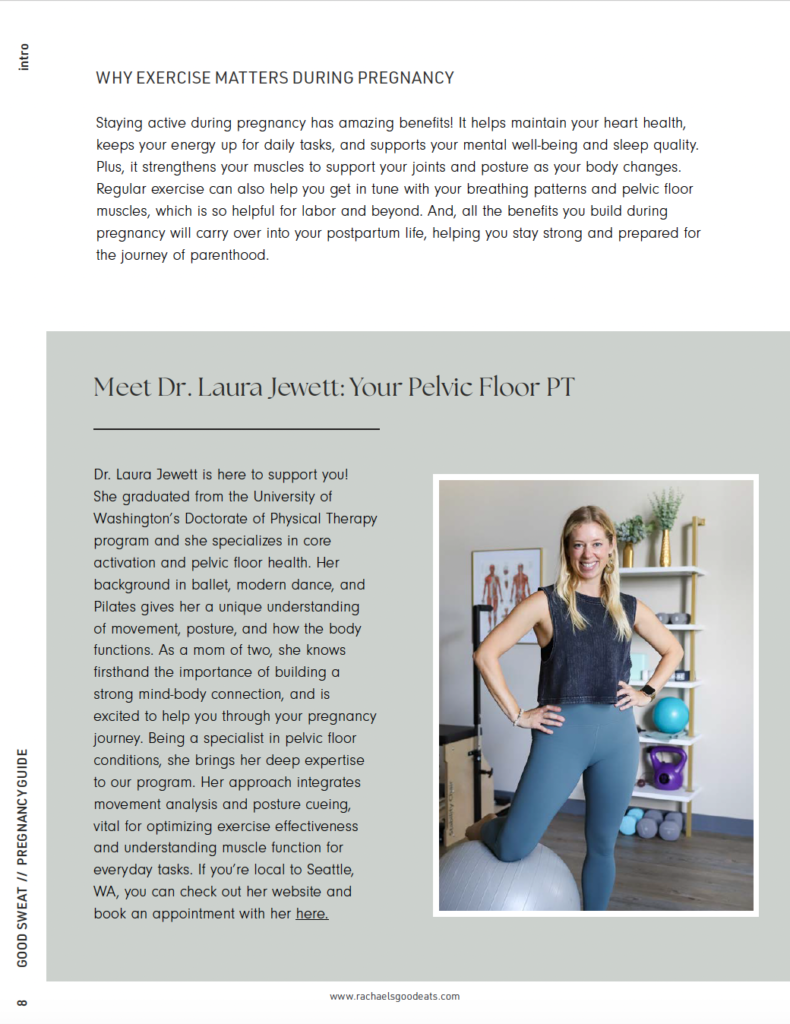
Another resource I obviously have to mention here is my GOOD // SWEAT Pregnancy Program. I originally created this program while I was pregnant with Hayes, and I used it throughout my entire first pregnancy. Now I’m using it all over again during my second pregnancy, which I feel like is probably the best endorsement I can give it lol. One of the biggest reasons I wanted to create it was to take the guesswork out of that daily, “Okay… what should I actually do in the gym—or at home—today?” feeling. Pregnancy comes with enough questions as it is, and I wanted movement to feel like something you could simply open up, follow, and trust.
The program includes 26 weeks of workouts, from weeks 13–38, specifically designed for the second and third trimesters. You can follow it straight through based on where you currently are in pregnancy, but I also really love that you don’t have to. Some days I feel great and want a full-body strength workout, and other days I’m thinking, okay, my legs feel sore, let’s do upper body only today. You can pick and choose based on how you’re feeling: upper body, lower body, full body, Pilates-style workouts, or maybe you just need some breathing and stretching that day. There are modifications throughout as your body changes, plus a video for every exercise so you’re not left trying to figure out what a movement is supposed to look like.
Something I’m especially proud of with this program is the huge emphasis on pelvic floor health. I worked closely with my pelvic floor physical therapist, Dr. Laura, while developing it, and she went through the program to provide education and guidance around the workouts, exercises, modifications, stretches, breathing, pelvic floor work, core care, diastasis recti, and movements or positions you may want to modify during pregnancy. There are also four detailed educational videos from Dr. Laura included in the guide. I learned SO much from her during my first pregnancy, and I wanted that education built into the program rather than just handing you a calendar of workouts and calling it good.
And you really don’t need a full home gym to do it. The equipment is pretty simple: a bench or chair, light dumbbells (2–8 lbs), medium dumbbells (10–15 lbs), a light-to-medium glute band, a long resistance band, and a yoga ball. You can do the workouts at home or take the program with you to the gym, which was really important to me when I created it.
I truly couldn’t recommend this program more. It’s not about pushing yourself to maintain some pre-pregnancy level of fitness or checking off every workout perfectly. The whole point is to give you options and take some of the mental load out of figuring out how to move as your body changes. You can open it up, see what feels good that day, and know you have a thoughtful workout—or even just some breathing and stretching—ready for you. That’s how I used it throughout my first pregnancy, and it’s exactly how I’m using it again with my second.
4. Learn and Prepare—Without Going Down the Internet Rabbit Hole
There is SO much information out there about fertility, pregnancy, birth, babies, sleep, feeding… you could genuinely research forever. I definitely did not read every pregnancy book out there lol, nor did I feel like I needed to.
I tried to be pretty selective about the information I consumed and the people I trusted. From a nutrition standpoint, Real Food for Pregnancy was one book I read and really liked. There’s also a newer book, 9 Months That Count Forever, that I’d recommend if you’re interested in learning more about how nutrition and lifestyle during pregnancy can support both mom and baby.
And then there was Baby Wise, which I conveniently left for Bridger to read and give me the down-low on 😂. Divide and conquer, right? Especially when it came to baby sleep, I was perfectly happy letting him do some of the research and report back with the important parts.
Honestly, a lot of what I learned came from conversations with people I trusted, my providers, my pelvic floor PT, friends who had already been through pregnancy and motherhood, and yes, social media too. There are some incredible experts sharing genuinely helpful, digestible information online. You just have to be thoughtful about who you’re getting that information from—especially when it comes to fertility, pregnancy, and health. I always want to know someone’s credentials and where the information they’re sharing is actually coming from.
And now that I’ve been through pregnancy, birth, postpartum, and raising a baby once already, I can confidently say you can research and prepare all you want and something will inevitably happen that you didn’t read about lol. I wanted to feel informed enough to make decisions and ask good questions, but I didn’t need to know everything before becoming a mom. And honestly, I think there’s something to be said for protecting your mental space from information overload, too.
Learn what feels helpful, lean on people you trust, and don’t feel like you need to become an expert on pregnancy or babies before you’ve even met yours.
Read this blog post on the books I read during pregnancy.
5. Take a Look at Your Home Environment
Once you start learning about some of the chemicals we’re exposed to through everyday products—and that certain chemicals can have endocrine-disrupting activity—it’s hard not to start looking around your house a little differently. I definitely did. I started paying more attention to the products we were using every single day and slowly swapping things out where it felt realistic.
And emphasis on slowly. I did not throw away everything in our house and spend thousands of dollars replacing it overnight lol. I really don’t think that kind of all-or-nothing approach is necessary or helpful. If something ran out, I might look for an option with ingredients I felt better about. If we needed new cookware, I’d research what I wanted to buy before replacing it. Little by little, those swaps added up.
Cleaning products were a big one for us. We use Branch Basics for the majority of our cleaning because I love that one concentrate can be diluted and used for so many different things around the house. We also don’t routinely use bleach in our home. Bleach can be irritating to the eyes, skin, and respiratory system—especially the fumes—and for everyday household cleaning, I personally prefer using gentler products when they can get the job done. That doesn’t mean bleach is inherently “toxic” or that no one should ever use it; there are situations where an EPA-registered disinfectant may be appropriate. It’s just not something we feel the need to use for our normal day-to-day cleaning.
I also started paying more attention to fragrance, because that ingredient can represent a mixture of different fragrance chemicals without every individual component necessarily being listed on the label. Whenever it makes sense, I tend to choose fragrance-free or unscented options—especially for things we’re using constantly like laundry detergent and cleaning products. It’s one of those relatively easy swaps that doesn’t make my life any harder, so why not?
The kitchen was another area I thought about. I slowly became more intentional with our cookware, food-storage containers, and the things that regularly come into contact with our food. I generally prefer glass for food storage when it’s practical, never heat food in plastic, and choose cookware made from materials I feel comfortable using every day. Again, I didn’t overhaul our kitchen overnight. These were gradual changes as things needed replacing anyway.
I think that’s the biggest takeaway here: you are never going to eliminate every exposure, and you don’t need to. We’re exposed to chemicals through our environment every day, and I don’t think preparing for pregnancy should turn into another thing to obsess over. For me, it was simply about looking at the products we used most often and asking, is there an easy swap here that makes sense for us?
Start with the things you use every single day—maybe that’s your cleaning spray, laundry detergent, food-storage containers, cookware, or personal care products—and go from there. You don’t need a perfectly “non-toxic” home before trying to conceive (and honestly, a truly non-toxic home isn’t a realistic standard anyway). I much prefer making thoughtful, practical changes where they make sense and then moving on with my life.
I shared more of the lower-tox and unscented products we use in our home here if you want a starting point.
Creating What I Need Along the Way
One of the coolest parts of what I get to do for work is that so many of the things I create end up coming out of really pivotal stages of my own life. I’m not sitting down thinking, what product should I make next? A lot of the time, I’m creating the resource that I genuinely want or need for myself, and then hopefully it can make that stage of life a little easier for someone else, too.
My GOOD // SWEAT Pregnancy Program is such a good example of that. I created it because I wanted to continue strength training and feel strong throughout pregnancy without constantly questioning what I should or shouldn’t be doing in the gym. I used it throughout my entire first pregnancy, and now here I am, pregnant again, using the same program week after week. It’s pretty surreal to be on the other side of creating something and realize it’s exactly what I want to use myself.
My cookbooks feel really similar. Food and nutrition have obviously been a huge part of my life since high school, but pregnancy and postpartum have made me appreciate having easy, balanced meals to fall back on even more. Especially with The High-Protein Plate, I can pull a recipe from the book and know I’ve already thought through the protein, carbs, healthy fats, and overall balance of the meal. During pregnancy, when my body is doing a LOT and good nutrition matters for both me and a growing baby, having those meals ready to pull from makes feeding myself well so much easier.
And I love that none of these resources are only useful for one very specific stage of life. The meals I ate before pregnancy are the same kinds of meals I’m eating during pregnancy, will lean on postpartum, and feed my family. Strength training was important to me before pregnancy, my Pregnancy Program helps me adapt it while I’m pregnant, and then there’s an entirely new stage of recovery and rebuilding strength on the other side of birth.
Which leads me to… after this baby, I’m planning to create a GOOD // SWEAT postpartum workout program. 🙂 I want to approach it the same way I did my Pregnancy Program: actually go through that stage myself, work with experts, pay attention to what feels helpful during my own recovery, and then turn all of that into something useful. I know firsthand how different postpartum movement can feel, so I’m really excited to create something that takes some of the guesswork out of okay, what am I ready for now? Stay tuned for that one.
It’s honestly really special to me that I get to build these things alongside you guys while I’m living them myself. They genuinely make these transitions easier and more supported for me, and then I get to turn around and hopefully make them a little easier for you, too.
You’re Already Doing Enough ❤️
Ultimately, preparing for pregnancy—and then preparing for a baby—looked a lot less dramatic for me than you might expect. There wasn’t one food, supplement, workout, book, or wellness hack that I believed was going to make it all go perfectly. A lot of it was simply continuing to take really good care of myself while adapting to what my body and life needed at the time.
That meant eating enough and building meals with protein, quality carbs, healthy fats, and plenty of plants. It meant strength training when I felt good, walking or stretching when that was what I needed, and resting without feeling guilty about it. It meant finding people I trusted, learning enough to feel informed without needing to know everything, and slowly preparing our home and our lives for a baby.
And honestly, that’s one of my biggest takeaways from going through this twice now. So many of the habits I focused on before pregnancy weren’t really “pregnancy habits” at all. They’re the same basic things that help me feel my best in everyday life, and they’ve carried with me through pregnancy, postpartum, motherhood, and now another pregnancy.
If you’re somewhere in this process yourself, I hope this gives you a few helpful places to focus without making you feel like there are 100 more things you suddenly need to be doing. Take what feels useful, leave what doesn’t, and know that your version of preparing might look completely different from mine.
The goal isn’t perfection. For me, it’s about feeling nourished, strong, informed, and supported—and giving myself plenty of grace for everything I can’t plan for along the way.