
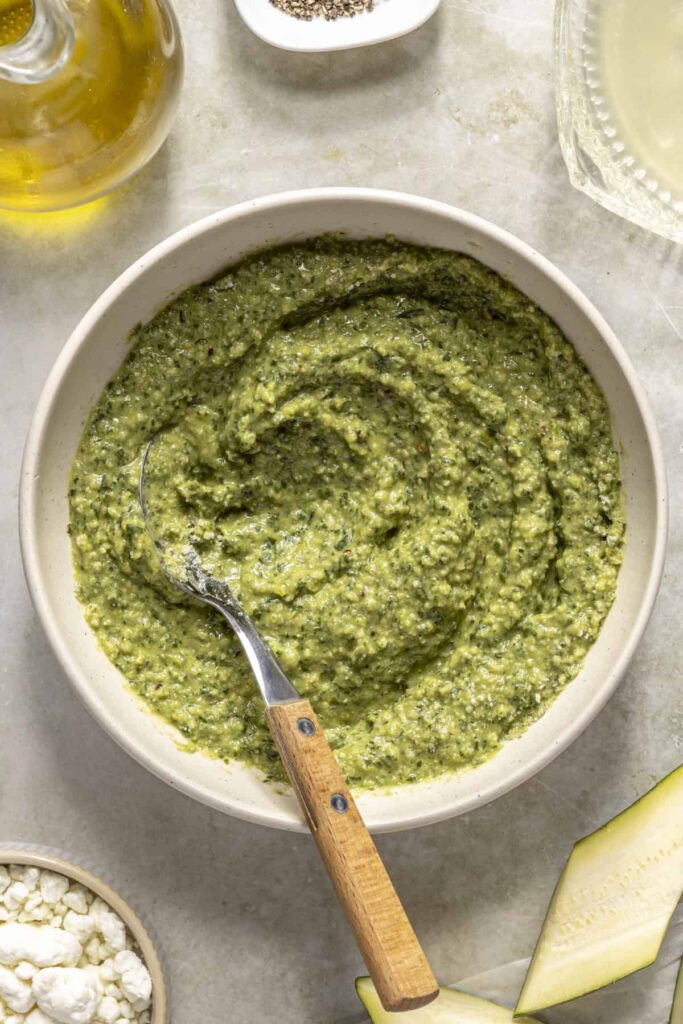
This homemade pesto recipe is one of those staples I come back to over and over again because it’s fresh, flavorful, and comes together in under 10 minutes. Made with fresh basil, toasted pine nuts, garlic, lemon, and extra-virgin olive oil, this easy homemade pesto works as a sauce, spread, dip, or marinade depending on what you’re making that week.
I love keeping a batch in the fridge for quick lunches, pasta nights, sandwiches, grain bowls, or roasted veggies when I need something simple that still adds a ton of flavor. It’s a tried & true recipe in my kitchen that I’m so excited to share with you.
Why You’ll Love This Homemade Pesto Recipe
Beyond tasting good, this homemade basil pesto is packed with ingredients that bring real nutritional value to the table.
Basil contains antioxidants that support overall health, olive oil provides heart-healthy fats that help with flavor and satiety, and pine nuts add a little protein and healthy fat for staying power. And the fresh lemon juice and zest brighten everything up while balancing the richness of the pesto sauce.
I also love that this recipe is naturally gluten-free, easily dairy-free if you skip the Parmesan, and made with simple ingredients you can actually recognize.
Easy Ways to Use Fresh Basil Pesto
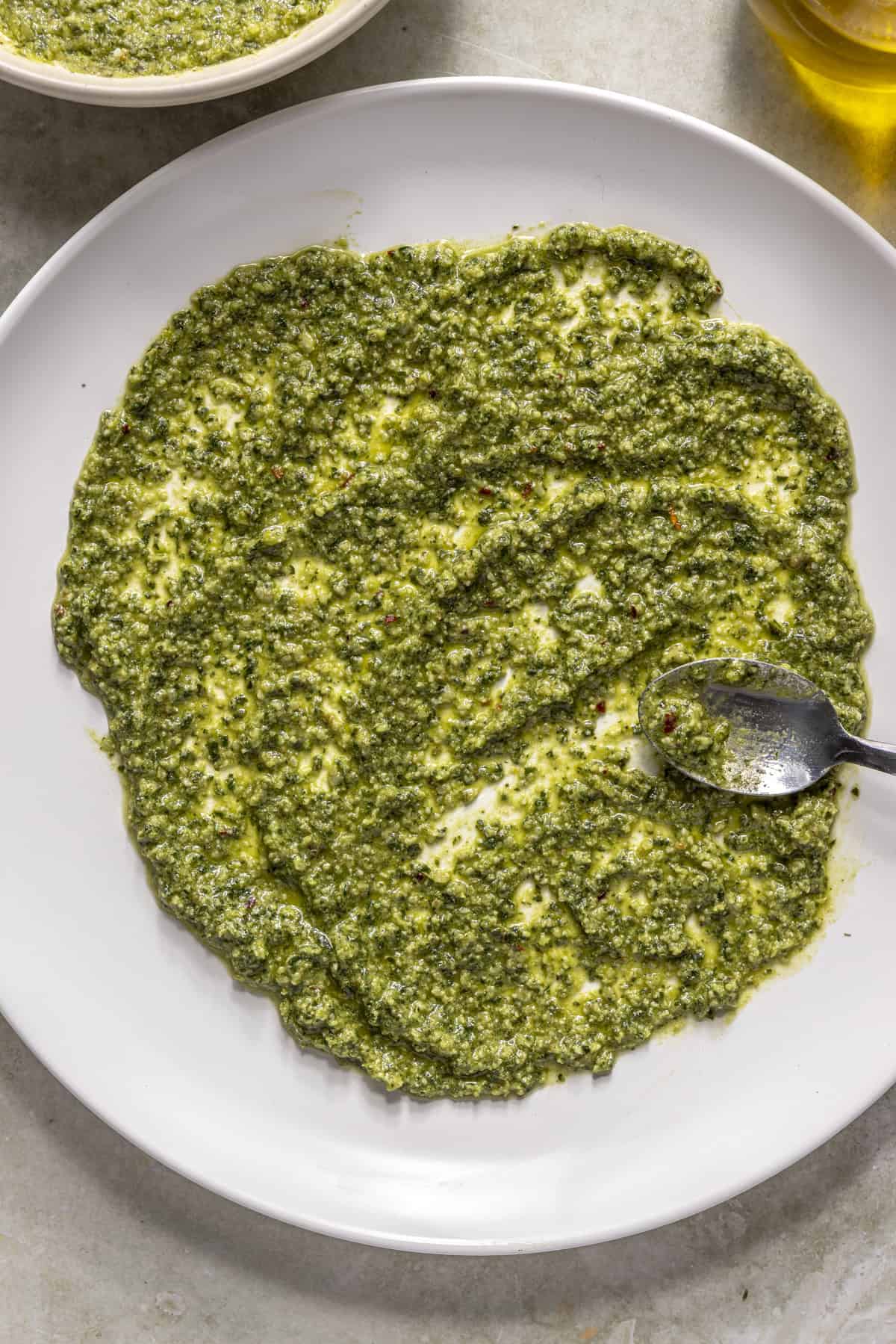
One of my favorite things about this fresh pesto recipe is how versatile it is. Toss it with pasta, spread it onto sandwiches, drizzle it over grilled proteins, or add it to roasted vegetables for an easy flavor boost.
When you want more ways to use it throughout the week, it’s especially good in recipes like my:
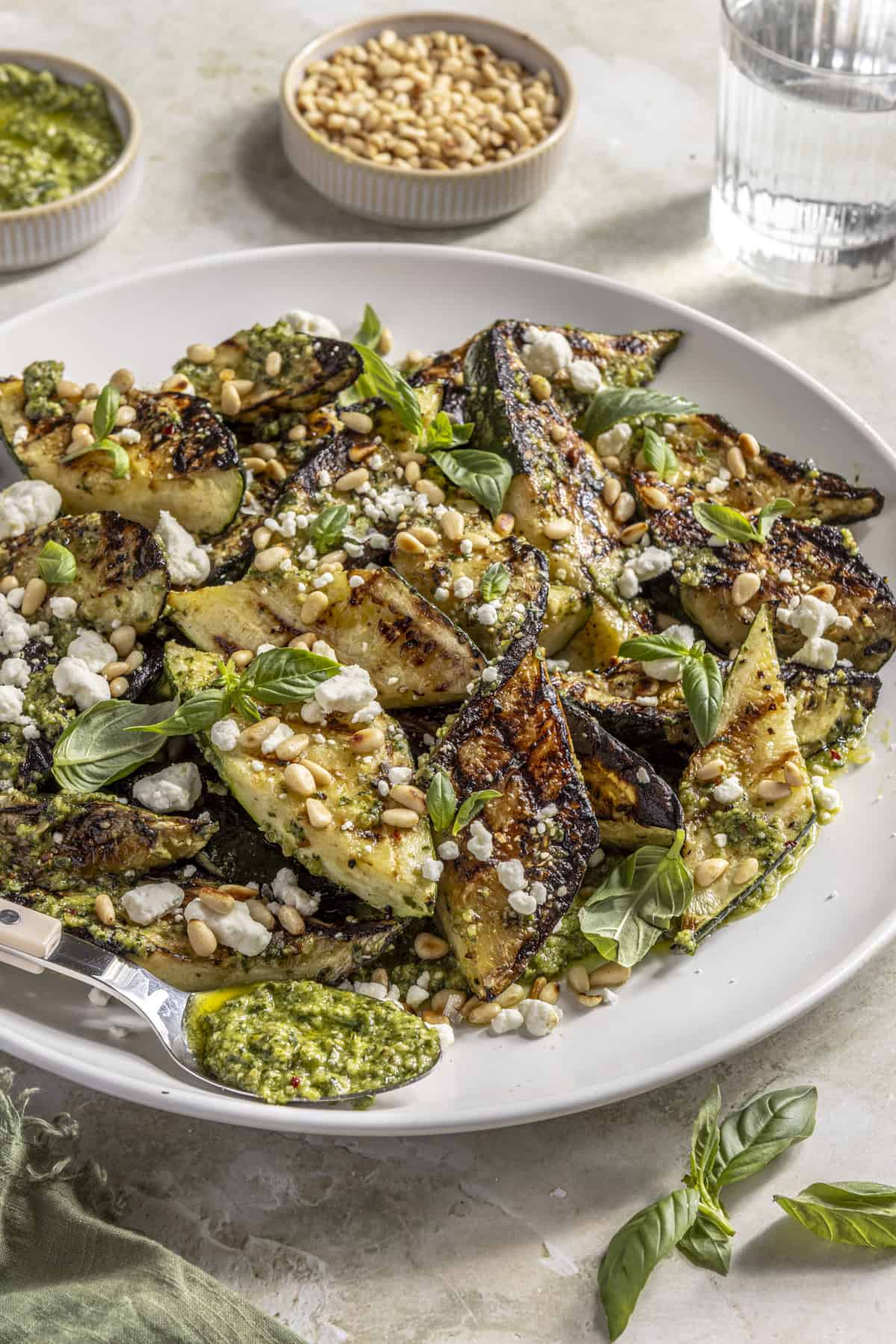
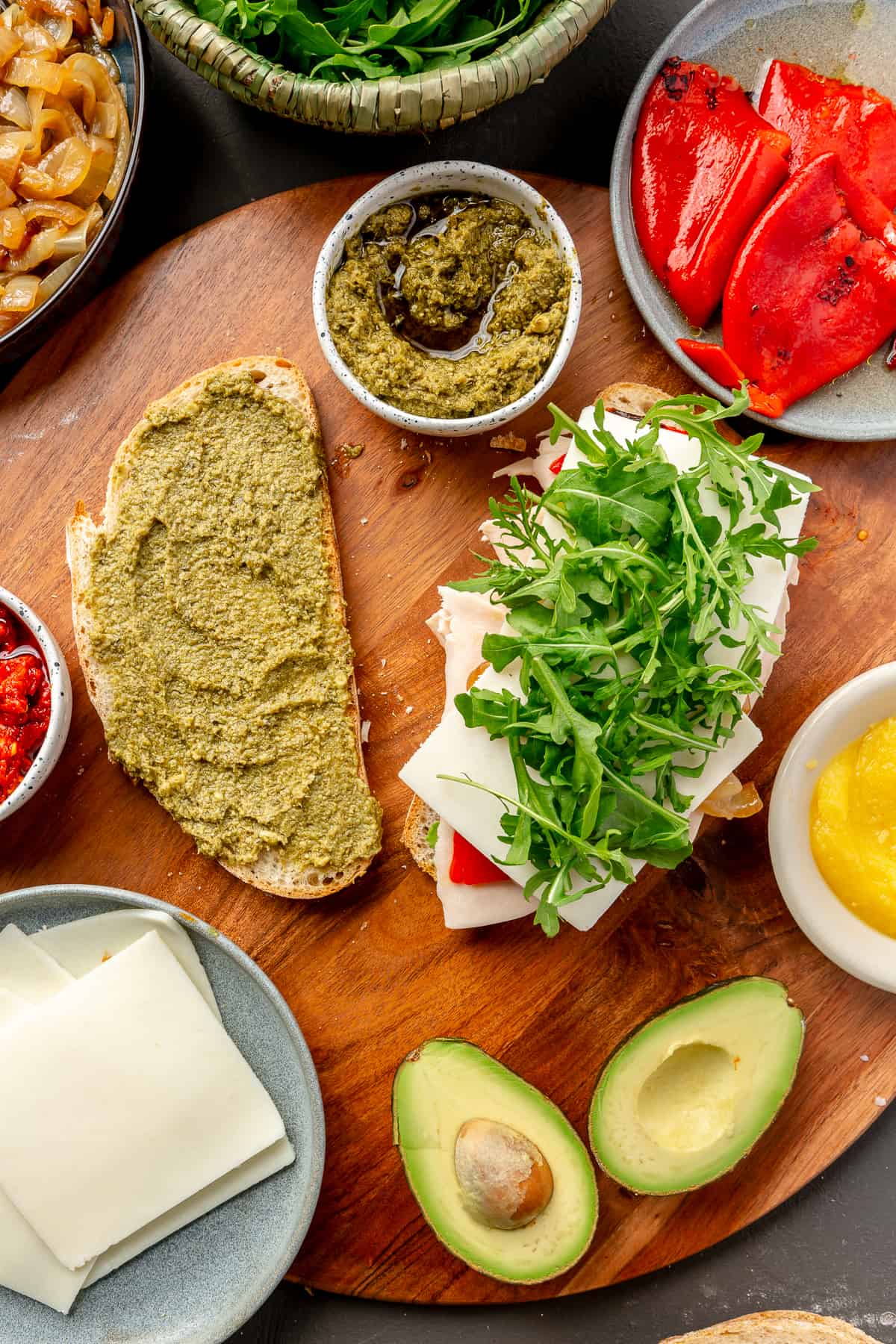
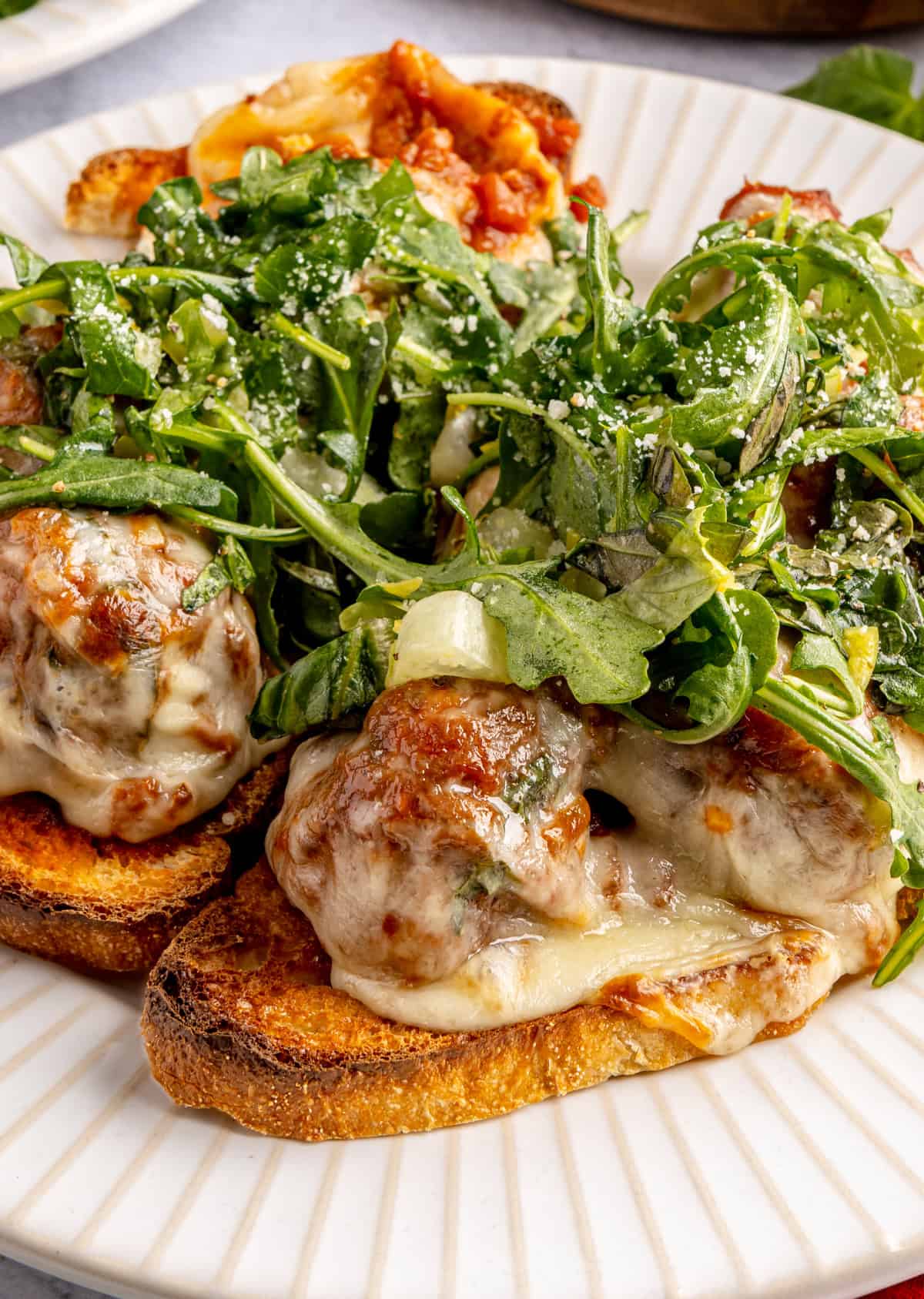
I’m telling you – this is one of those healthy sauce recipes that instantly makes meals feel more elevated without adding much extra work. Hope you love it! And don’t forget to let me know in the comment section below, or tag me on IG with all the creative ways I know you guys will serve this one.
Ingredients You’ll Need:
- Garlic cloves
- Toasted pinenuts
- Fresh basil leaves
- Lemon zest
- Kosher salt
- Red pepper flakes
- Freshly squeezed lemon juice
- Extra-virgin olive oil
- Freshly grated Parmesan cheese (omit to make dairy-free)
How To Make Homemade Pesto
Looking for the full recipe?
Scroll down to the Recipe Card below for complete instructions & measurements.
This homemade pesto recipe comes together in just minutes with fresh basil, toasted pine nuts, lemon, and olive oil for a vibrant sauce that’s perfect for pasta, sandwiches, bowls, and more.
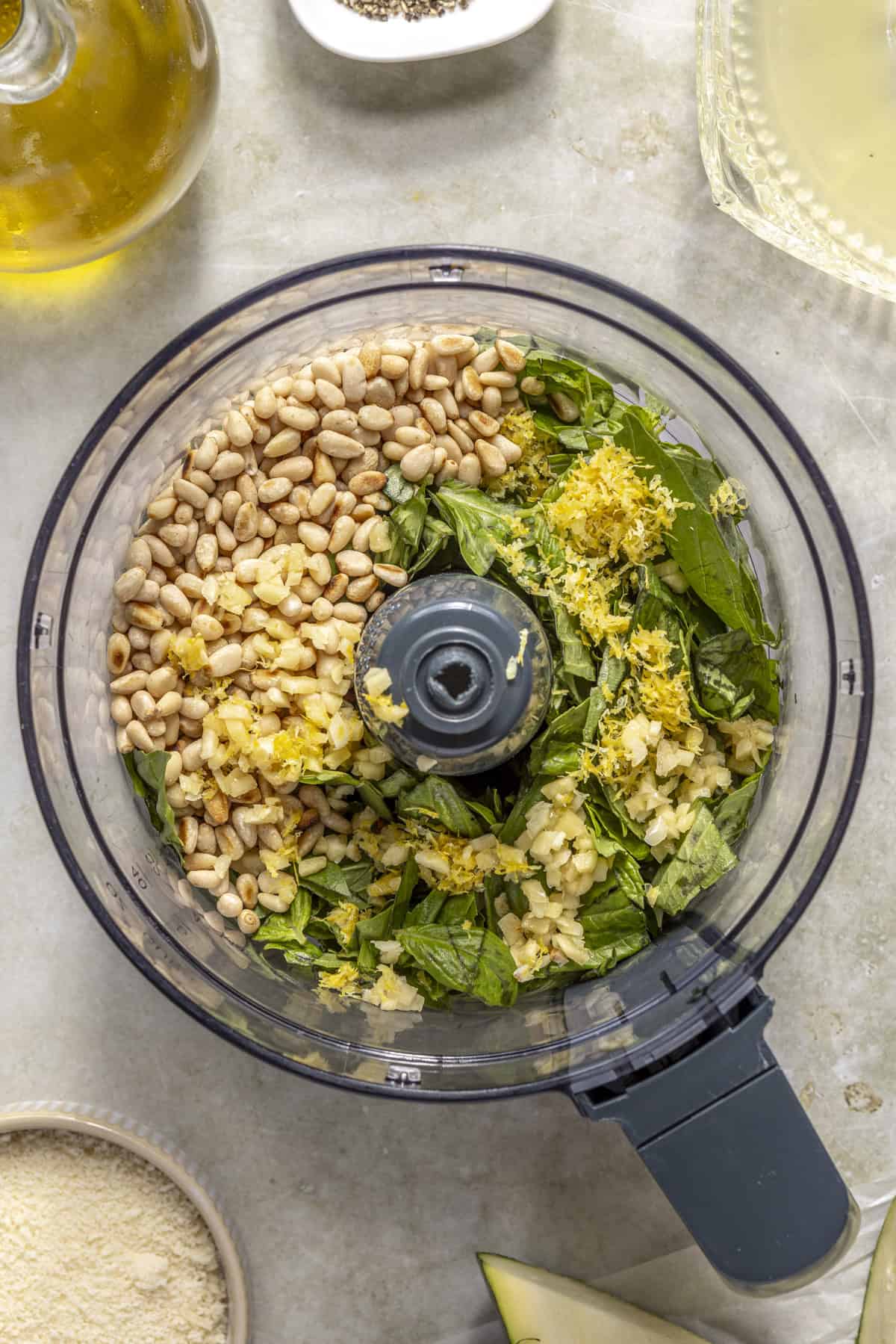
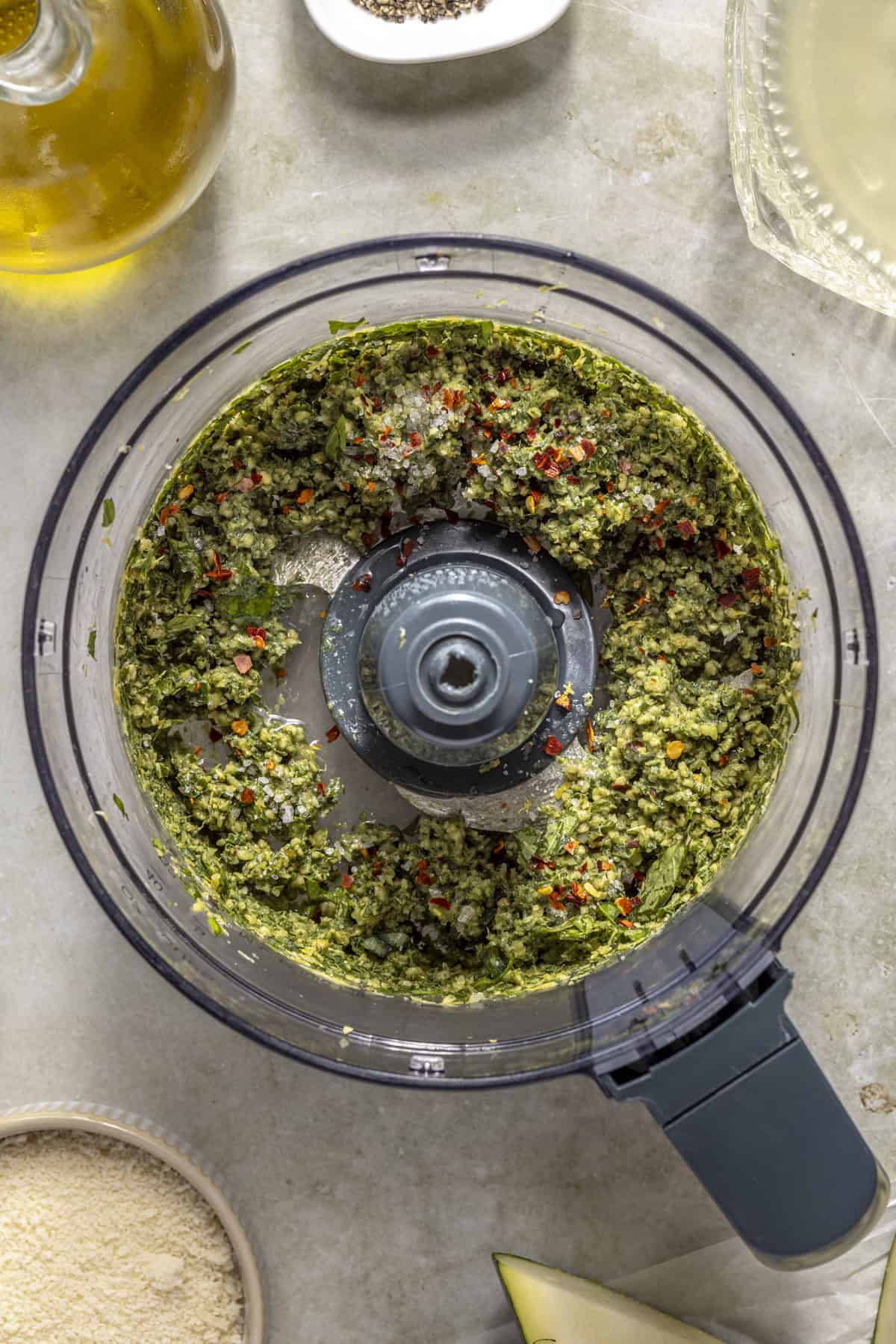
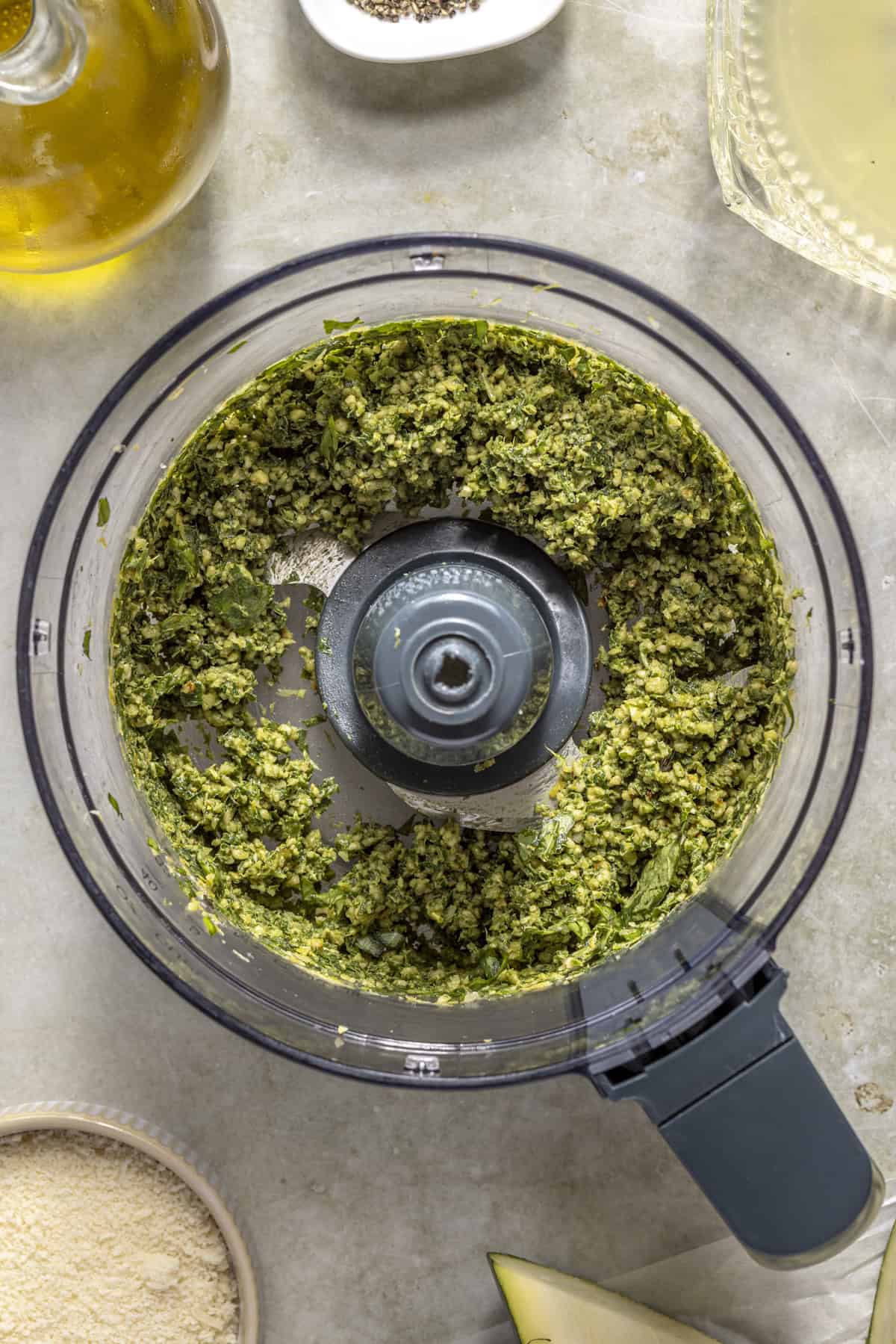
- Blend the base ingredients. Add the garlic, toasted pine nuts, basil, and lemon zest to a high-speed blender or food processor. Pulse until the mixture becomes sandy and finely chopped.
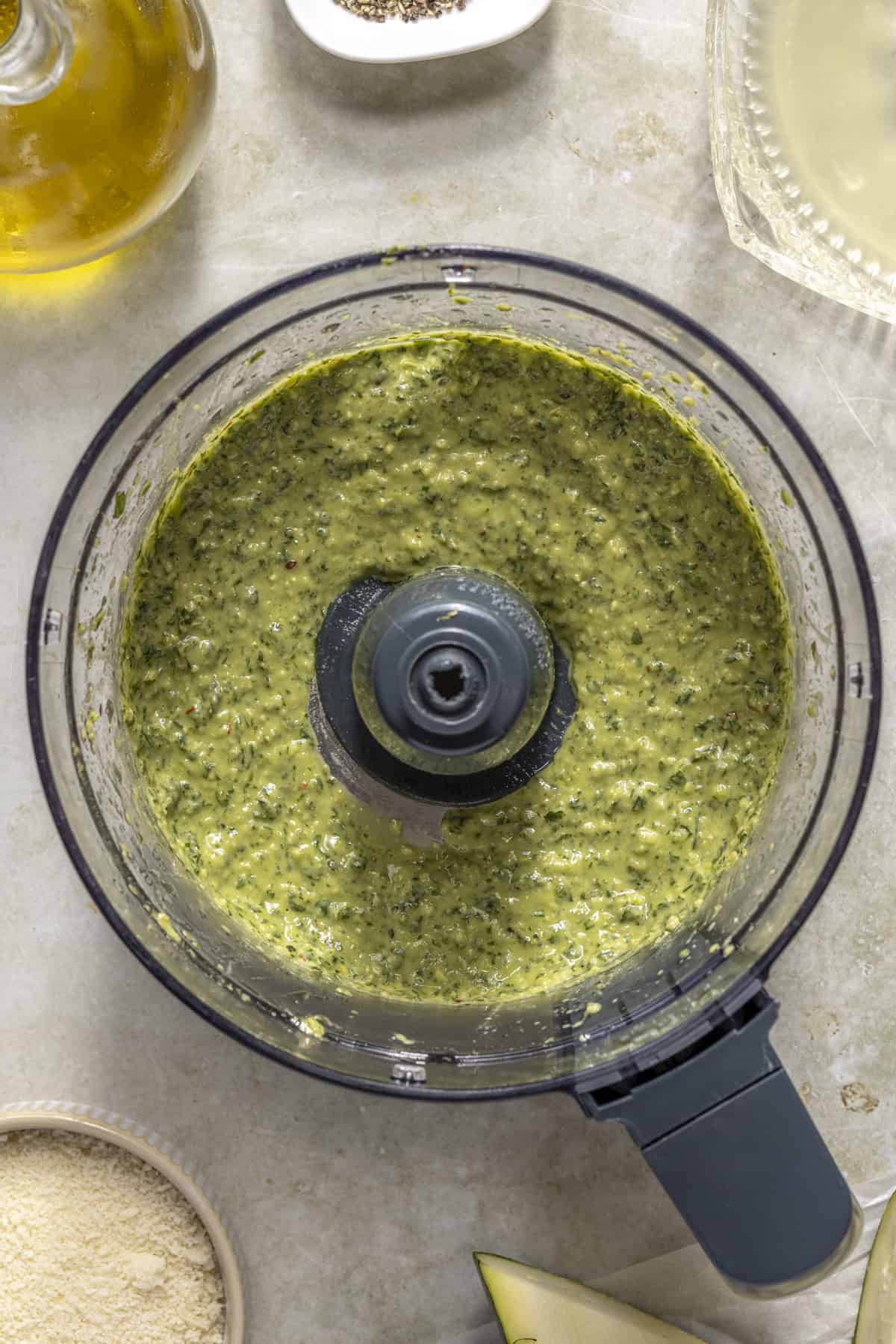
- Stream in the olive oil. Add the salt, red pepper flakes, and lemon juice. With the blender running on low, slowly stream in the olive oil until the pesto is smooth but still has a little texture.
- Adjust as needed. If your pesto feels too thick, add a little more olive oil, 1 tablespoon at a time, until it reaches your desired consistency.
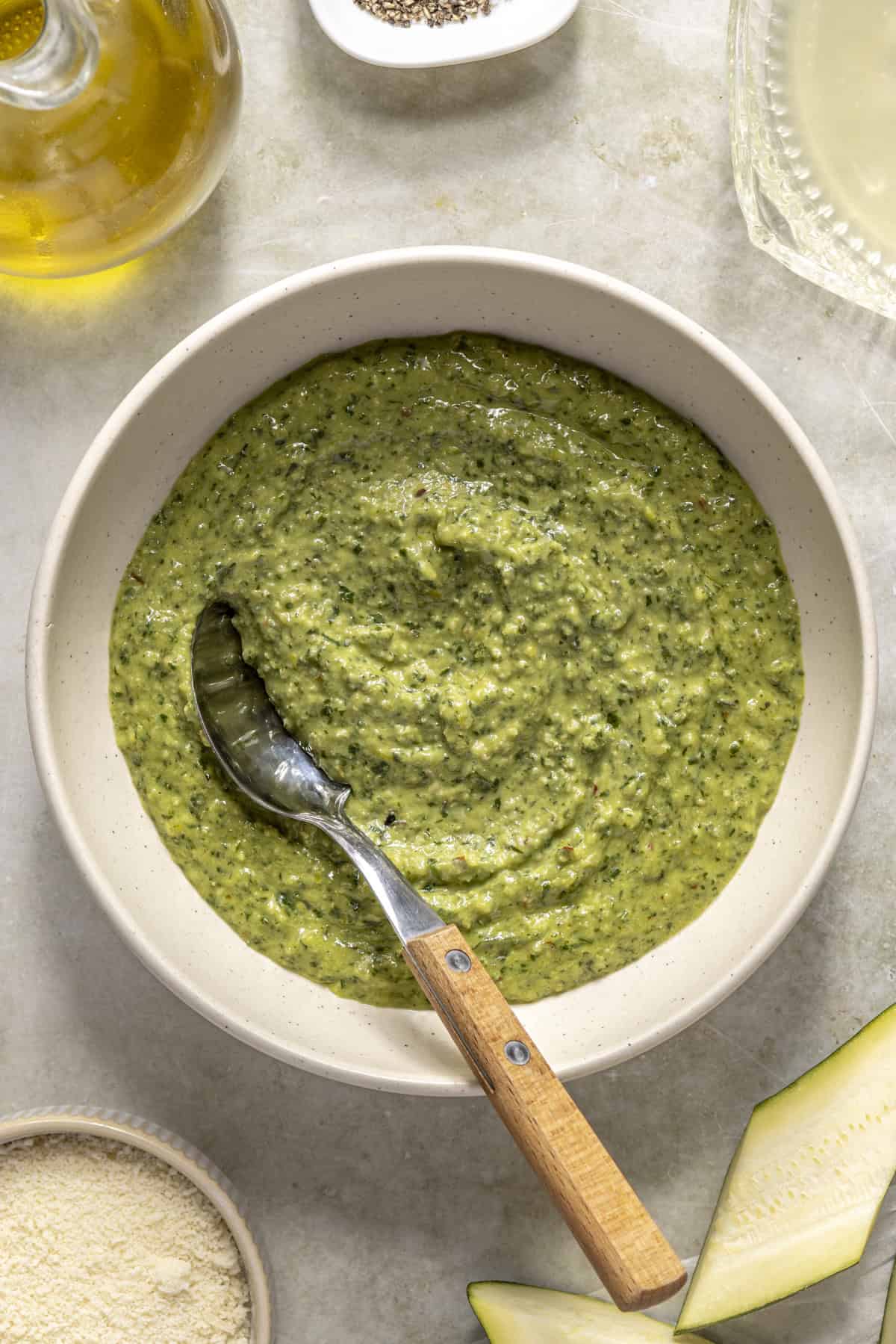
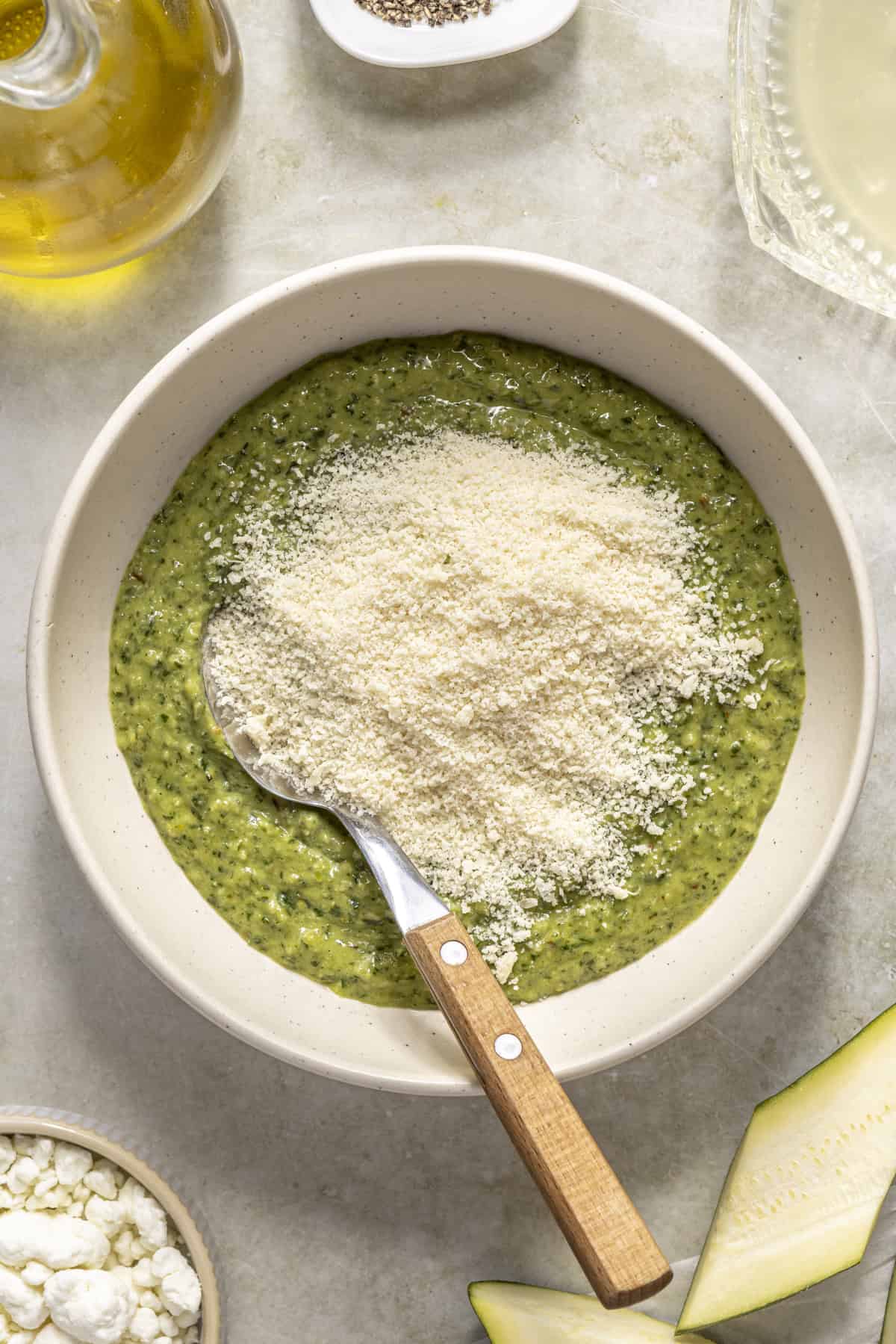
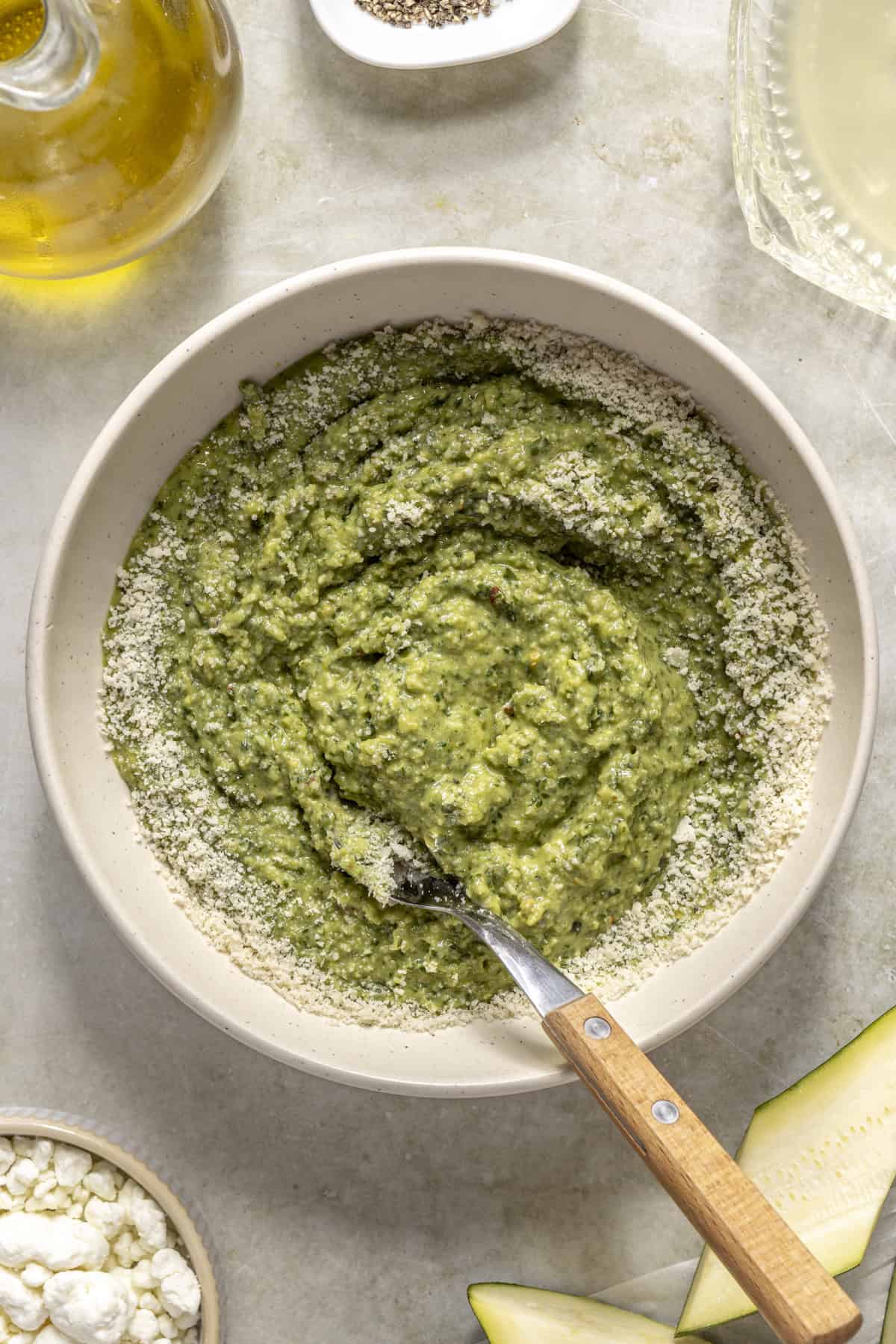
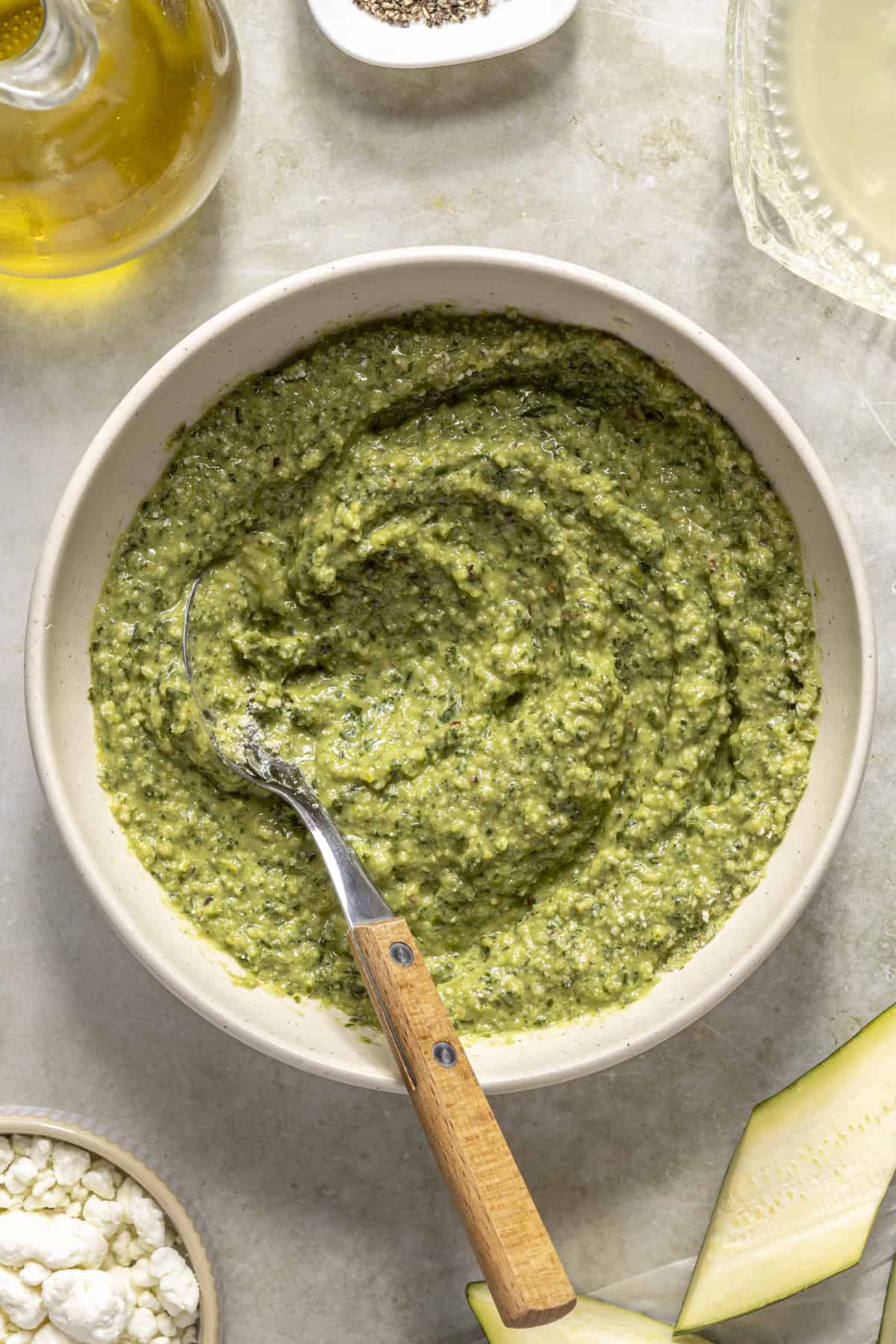
- Finish with Parmesan. Transfer the pesto to a bowl and stir in the grated Parmesan, if using. Taste and adjust seasoning as needed.
- Serve or store. Enjoy immediately or store leftovers in an airtight container in the refrigerator with a thin layer of olive oil on top to help keep it fresh and vibrant green.
Recipe Swaps & Substitutions
Here are a few easy substitutions and swaps to help you customize this Homemade Pesto Recipe based on what you have on hand or your dietary needs.
- Pine nuts → Swap with walnuts, almonds, cashews, or sunflower seeds for a more budget-friendly or nut-free pesto variation while keeping a similar creamy texture.
- Parmesan cheese → Omit completely for a dairy-free pesto, or use a dairy-free Parmesan alternative or nutritional yeast for a similar savory, umami flavor.
- Fresh basil → Replace up to half with spinach, arugula, or kale for a slightly milder flavor and extra greens (basil should still be the dominant herb for classic pesto flavor).
- Extra-virgin olive oil → Use avocado oil if preferred, though olive oil will give the most traditional flavor and richness.
- Lemon juice & zest → Fresh lime juice/zest can be used in a pinch, though lemon keeps the most balanced, classic pesto profile.
- Garlic → Roast the garlic first for a softer, sweeter flavor if you prefer a less sharp, more mellow pesto.
- Red pepper flakes → Omit for a mild pesto, or increase slightly for more heat depending on preference.
- Salt → Start with less and adjust at the end, especially if using salted nuts or Parmesan to avoid over-seasoning.
For my kitchen, cooking, and baking essentials (& more!), shop my Amazon Storefront.
FAQs
Why does homemade pesto sometimes turn brown?
Homemade pesto can turn brown due to oxidation, which happens when basil is exposed to air and heat. To help prevent this, use fresh basil, blend just until combined (don’t over-process), and store it with a thin layer of olive oil on top. The lemon juice in this homemade pesto recipe also helps slow oxidation and keeps the color brighter longer.
Can I make pesto without a food processor or blender?
Yes—you can make pesto by hand using a sharp knife and a mortar and pestle. Finely chop the basil, garlic, and nuts, then mash everything together while slowly mixing in olive oil. The texture will be more rustic, but the flavor will still be very similar to a traditional homemade pesto recipe.
Why does my pesto taste bitter?
Pesto can taste bitter if the olive oil is too strong, the basil is over-processed, or the garlic is too raw or overpowering. Using high-quality olive oil and pulsing the ingredients instead of fully blending helps maintain balance. Adding lemon juice, like in this recipe, also helps brighten and smooth out bitterness.
What pasta goes best with homemade pesto?
Short pasta shapes like fusilli, penne, or rigatoni work especially well because they hold onto the sauce. That said, this homemade pesto recipe also works beautifully with long noodles like spaghetti or linguine. It’s also great tossed with roasted vegetables or used as a spread in sandwiches and wraps.
Is pesto considered healthy?
Pesto can absolutely be part of a balanced diet. It’s made with olive oil (heart-healthy fats), basil (antioxidants), and nuts (healthy fats + a bit of protein). While it’s calorie-dense, a little goes a long way, which is why it works well as a flavorful addition rather than the main component of a meal.
Shop My Kitchen Favorites
More Easy Sauce Recipes & Ways to Use Pesto
- Easy Grilled Pesto Zucchini with Goat Cheese & Pine Nuts
- Avocado Turkey Pesto Paninis
- High-Protein Chicken Pesto Parmesan Meatball Subs
- Loaded Chicken Pesto Panini
- Cilantro Avocado Sauce
- Creamy Homemade Vodka Sauce (With Hidden Veggies)
Homemade Pesto Recipe
Ingredients
- 3 cloves garlic, roughly chopped
- ½ cup toasted pinenuts
- 2 packed cups fresh basil leaves, roughly chopped
- 2 teaspoons lemon zest
- ½ teaspoon kosher salt
- ¼ teaspoon red pepper flakes
- 3 tablespoons freshly squeezed lemon juice
- ½ cup extra-virgin olive oil, plus more if needed
- ¼ cup freshly grated Parmesan cheese, (omit to make dairy-free)
Instructions
- In a high-speed blender or food processor, add the garlic, pine nuts, basil, and lemon zest. Pulse until the mixture becomes sandy.
- Season with salt and red pepper flakes and add the lemon juice. With the blender running on low, begin to stream in the olive oil. Continue to blend, scraping down the sides intermittently, until well combined. You still want a little texture!
- Note: If the mixture is too thick, stream in additional olive oil, 1 tablespoon at a time.
- Transfer to a bowl, then stir in the grated Parmesan (if using). Serve & enjoy however you prefer!
To Store:
- Store leftover pesto in an airtightcontainer in the refrigerator for up to 5 days. To help keep the pesto vibrantand green, pour a thin layer of olive oil over the top before sealing. You can also freeze in a sealedcontainer or ice cube tray for up to 3 months. Thaw in the refrigeratorovernight before using.
Notes
- Pine nuts: Swap with walnuts, almonds, cashews, or sunflower seeds.
- Parmesan cheese: Omit for dairy-free or use nutritional yeast/dairy-free parm.
- Basil: Replace part with spinach or arugula (keep basil as the base for classic flavor).
- Olive oil: Avocado oil works in a pinch, but olive oil gives best traditional flavor.
- Lemon juice/zest: Lime can be substituted, though lemon is most balanced.
- Garlic: Roast for a milder, sweeter flavor or use raw for classic sharpness.
- Red pepper flakes: Adjust to taste or omit for a mild pesto.
- Salt: Start light and adjust after blending, especially if using salty add-ins.